
LAKE STREET/OMAHA
Search

19th century, Biographies, Government, Politics, schools, Streets
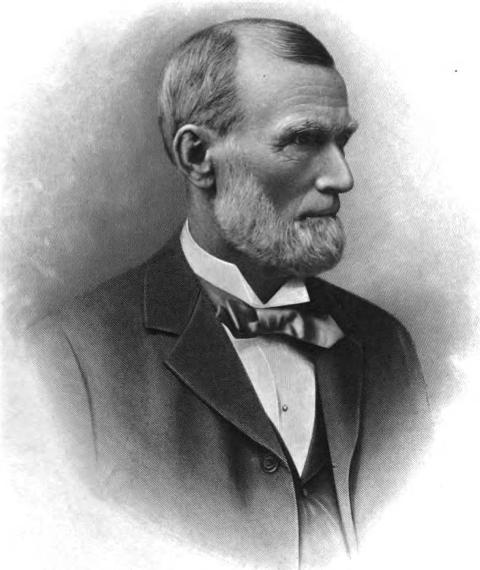
A Biography of North Omaha’s George B. Lake
There is a street that starts in North Omaha and shoots west, with a man so respected by Omahans that more than a century later they named another street after him. North Omaha has been filled with interesting people since the city was founded, and even before that. One of them was Judge George Baker…
November 14, 2015
3 minutes
There is a street that starts in North Omaha and shoots west, with a man so respected by Omahans that more than a century later they named another street after him. North Omaha has been filled with interesting people since the city was founded, and even before that. One of them was Judge George Baker Lake.
Early Life
Born in Greenfield, New York in 1827, Lake’s family moved to Ohio when he was a teen. After working on farms when he was young, he went to Oberlin College in Ohio from 1849 through 1851.
He became a lawyer in Ohio in 1851. In November 1856, he moved to the Nebraska Territory and opened up shop in Omaha City. His early partnerships included A. J. Poppleton, George Gilbert, and Charles Brown. In 1863, he was a lawyer in the trial of Nebraska’s first executed prisoner, Cyrus Tator, and the next year he was judge in the trial of the second execution.
Political Career

Widely recognized as a powerful lawyer, Lake was also a successful politician in early Nebraska. Lake was voted in as a Republican legislator in the Nebraska Territory Senate. He helped draft the Nebraska constitution for statehood, and attended the state’s constitutional convention on behalf of Douglas County.
In 1864, he was elected Speaker of the Senate. A few years later, he was appointed to the Supreme Court of the new State of Nebraska. In 1888, he created a partnership with James Hamilton, and was a lawyer for the rest of his life.Lake was a late abolitionist. Arriving in Nebraska as a Democrat, in the early legislatures he didn’t believe the territory needed an anti-slavery bill. However, his mood changed quickly, and in 1861, he proposed the Nebraska Territory ban slavery in the legislature. His proposal was voted down. Soon after, an early Nebraskan newspaper called him “a radical democrat and African equalizer.” He ended up joining the Republican party for their resistance to slavery.
He was the first Chief Justice of the Nebraska Supreme Court. During his seventeen years on the Court, Judge Lake was widely said to be effective, finely balanced and “splendidly intellectual.” He also served as judge during the trial of Standing Bear vs. Crook in 1879. Lake volunteered as a member of the Omaha Public Schools board, and eventually served four terms in the legislature. He died in 1910 in Omaha. His wife, Abbie Hayes Lake, died in 1920.
Tributes
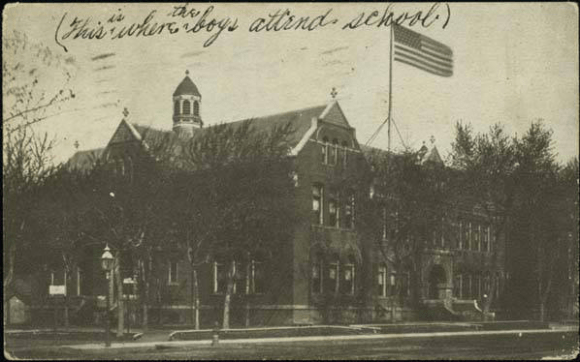
Lake Street was named for the judge while he was alive, as well as a school that was built on his land. The man is still so respected that George B. Lake Parkway in extreme west Omaha was named for him in the 2000s, a century after he died!
You Might Like…
- A History of Lake School
- A History of the Hanging of Cyrus Tator
- A History of the 24th and Lake Historic District
- A History of the Intersection of 20th and Lake
Share this:
Discover more from NorthOmahaHistory.com
Subscribe to get the latest posts sent to your email.
Type your email…
Subscribe
Leave a comment
Write a comment…Comment
Author

Written by
Adam F.C. Fletcher
I share about youth, education, history and more. Learn more about me at https://adamfletcher.net
Recent Posts
- 20th century, American Legion Post #30, Black History, Black people, events, Military, SegregationA History of Omaha’s African American Service Members in World War IAdam Fletcher Sasse
- 20th century, business, Carter Lake, Locust Street, Lost history, Organizations, SportsA History of the Lakeside RacewayAdam Fletcher Sasse
- Black History, Black people, Ethnicities & Races, Integration, Racism, SegregationFocus: Black History in OmahaAdam Fletcher Sasse
Categories
Categories Select Category Abolition (3) Activism (32) Adam Fletcher Sasse (21) presentation (7) Age groups (18) Children (6) Parents (2) Senior citizens (8) Students (7) Youth (4) Americans (22) Archaeology (1) Architecture (328) Architects (37) Buildings (191) #PreserveThisPlace (15) Demolished buildings (90) Listed on National Register of Historic Places (25) Official Omaha Landmark (11) Historic houses (70) Houses (66) Apartments (10) Mansions and estates (8) Normal house history (15) Retirement homes (2) Shacks and shanties (1) Styles (30) Art Deco & Art Moderne (2) Commercial vernacular (5) Gothic (4) Italianate (4) Midcentury Modern (MCM) (3) Modern (2) Neoclassical or Classical Revival (3) Queen Anne (7) Wrecked buildings (62) Art (10) Biographies (135) Book review (1) Books (11) business (239) Amusement parks (1) Bakery (4) Banks (2) Bar or Tavern (6) Cafes (9) Caterers (1) clubs (10) Construction (1) Department store (1) doctors (6) Drug store (6) Farming (2) Fur trading (5) Garages (1) Grocery store (24) Hotels (1) Industry (35) Law (11) Manufacturing (12) Media (13) Newspapers (9) Railroads (11) Train depots (1) real estate (24) Subdivision (1) Restaurants (17) Ice cream (4) shopping (5) Theaters (12) Theatres (14) Civic Infrastructure (438) Belt Line Railway (20) Cemeteries (31) Forest Lawn burial (22) Prospect Hill burial (1) Education (26) Creighton University (9) University of Omaha (4) Government (112) Fire stations (3) Officials (1) Omaha Police Department (5) OPD (5) Public housing (5) Parks (27) Streets (301) Ames Ave (29) Ames Avenue (12) Cuming Street (15) Florence Boulevard (15) Fontenelle Boulevard (13) Fort Street (4) Intersections (12) Lake Street (9) Locust Street (3) Military Avenue (7) North 16th Street (48) North 24th Street (131) 24th and Lake (29) North 30th Street (61) North 40th Street (6) North 72nd Street (2) Wirt Street (3) Transportation (39) Belt Line (8) Bridges (5) Highways (5) Omaha & Council Bluffs Street Railway Co. (7) Comic – North Omaha Chronicles (11) Crime (75) lynching (2) Culture (249) Children’s entertainment (3) Clubs (13) diners (7) events (32) 1898 Trans-Mississippi and International Exposition (25) Expo Grounds (12) music (20) Jazz (4) nightlife (27) Social clubs (7) Social halls (7) Sports (15) Baseball (4) Economics (215) Middle class (1) Ownership (14) Poverty (46) Wealth (39) Environment (1) Ethnicities & Races (409) Black History (295) Black businesses (43) Black hotels (2) Black-owned banks (1) Black churches (18) Black culture (14) Parades (1) Black organizations (36) American Legion Post #30 (2) Great Plains Black History Museum (2) Black people (126) Black athletes (9) Black attorneys (3) Black businesspeople (20) Black barber (3) Black dentists (2) Black doctors (2) Black educators (4) Black leader (18) Black ministers (3) Black performers (9) Musicians (2) Black writers (3) Poindexter and we Langa (27) Black politicians (27) Black spaces and places (29) Enslaved Person (5) English (2) Europeans (7) French (4) Germans (3) Irish (1) Italians (3) Jewish (14) Native Americans (10) Race riot (48) Racism (196) Civil Rights Movement (28) Integration (4) Redlining (4) Segregation (85) Scandinavians (2) Spanish (3) White flight (108) White people (31) Fiction: Keller Jefferson, P.I. (1) Focus Topic (6) Food (27) General history (427) Historic districts (10) historic preservation (182) History museums (3) History of Nebraska (151) Lost history (240) Geography (39) Missouri River (23) Water (10) ghosts (14) Guest author (37) Jody Lovallo (4) Michael Richardson (26) Ryan Roenfeld (2) Halloween (10) Immigrants (20) Laurel Hill Cemetery (1) Military (7) Civil War veteran (1) Neighborhoods (408) Bedford Place (1) Belvedere (2) Bemis Park (2) Bemis Park Landmark Heritage District (3) Benson (13) Carter Lake (29) Central Park (3) Downtown (3) Druid Hill (2) East Omaha (42) Fairfax (3) Florence (53) Mayors of Florence (3) Florence Field (9) Fontenelle View (2) Fort Omaha (7) Gifford Park (1) Gold Coast (1) Jefferson Square (3) Kellom Heights (4) Kountze Place (67) Long School (12) Miller Park (38) Minne Lusa (22) Monmouth Park (8) Near North Side (147) North Downtown (13) Ponca Hills (7) Saddle Creek (2) Saratoga (45) Sherman (3) Walnut Hill (5) Wyman Heights (2) North Omaha (102) Omaha (29) Organizations (96) American Legion (4) Black Panthers (9) Hospitals (8) NAACP (7) Omaha Claim Club (10) Omaha Municipal Land Bank (4) Prince Hall Masons (5) Social services (8) Podcast (3) Politics (126) Legislators (11) press release (6) Prospect Hill Cemetery (3) Religion (84) Churches (59) African Methodist Episcopal (8) Baptist (10) Catholics (12) COGIC (2) Lutheran (4) Presbyterian (6) United Methodist (10) Mormons (10) Resources (2) History Tours (2) schools (52) Lake School (1) self-published (25) Settlements (8) society (139) Healthcare (10) Public health (4) storytelling (31) Timeframe (602) 16th century (9) 17th century (8) 18th century (24) 19th century (275) 20th century (541) 21st century (317) Harlem Renaissance (4) Pioneer era (43) Reconstruction (2) weather (4)
Trending
- 20th century, American Legion Post #30, Black History, Black people, events, Military, SegregationA History of Omaha’s African American Service Members in World War IAdam Fletcher Sasse
- 20th century, business, Carter Lake, Locust Street, Lost history, Organizations, SportsA History of the Lakeside RacewayAdam Fletcher Sasse
- Black History, Black people, Ethnicities & Races, Integration, Racism, SegregationFocus: Black History in OmahaAdam Fletcher Sasse
- 20th century, Demolished buildings, Department store, Integration, Jefferson Square, Jewish, Near North Side, North 24th Street, North DowntownA History of Mayper’s Store in North OmahaAdam Fletcher Sasse
© 2025 Adam Fletcher Sasse. All Rights Reserved.
NorthOmahaHistory.com is a project of Fletcher Engagement Services.
Adam Fletcher Sasse of NorthOmahaHistory.com believes silence is complicity. ALL history matters. Solidarity is intersectional. Black lives matter. Children and youth matter all of the time. Bodily autonomy is necessary. Gender is not binary. Mental health is a priority. No human is illegal. Women’s rights are human rights. Honor the elders. People matter more than politics. Equity is more necessary than equality. Everyone can be engaged everywhere all of the time. This is not a season, its a lifetime. We can ALL make a difference.
Learn more »
I acknowledge and pay tribute to the Umoⁿhoⁿ (Omaha), the Jíwere–Ñút’achi Máyaⁿ (Otoe-Missouria), the Očhéthi Šakówiŋ (Great Sioux Nation), and the Chatiks si chatiks (Pawnee), who historically lived and hunted in the area called North Omaha today. Now, North Omaha community sits next to the Missouri River, traditionally known as the Umoⁿhoⁿ to the Omaha, the Niúachi to the Oto-Missouria, and Mnišóše to the Lakota of the Očhéthi Šakówiŋ. I strive to learn and teach about this place “in a good way.”
Designed with WordPress.
