
TRANSGENDER RESEARCH

Biological Differences Between Transgender and Cisgender Individuals Before Hormonal Treatment
An in-depth exploration of pre-treatment biological distinctions based on recent scientific findings
Key Takeaways
- Neurological Structures Align with Gender Identity: Brain morphology and functional patterns in transgender individuals often correspond more closely with their identified gender than their assigned sex at birth.
- Genetic and Prenatal Factors Influence Gender Identity: Variations in specific genes and prenatal hormone exposures play a significant role in the development of gender identity.
- Distinct Physical Traits and Behavioral Patterns: Subtle differences in physical anatomy and gender-typical behaviors support the biological basis of gender identity.
Introduction
Understanding the biological underpinnings of gender identity is a complex endeavor that bridges neuroscience, genetics, endocrinology, and psychology. Recent scientific research has increasingly focused on identifying the biological differences between transgender and cisgender individuals before the initiation of hormonal treatments. This comprehensive analysis synthesizes findings from multiple studies to elucidate these differences, offering insights into how gender identity is rooted in various biological factors.
Neurological Differences
Brain Structure and Function
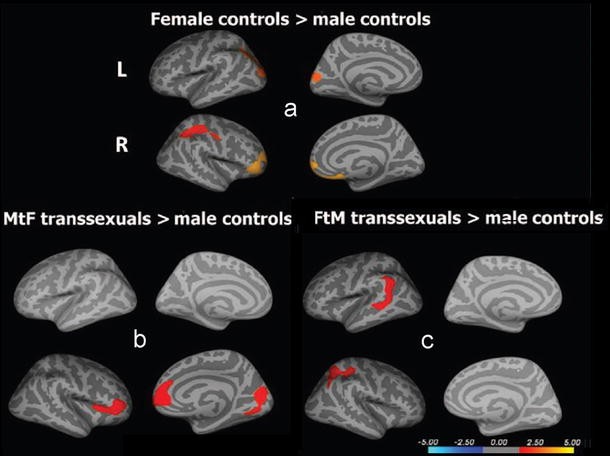
Structural and functional brain imaging studies have revealed significant differences in the brains of transgender individuals compared to their cisgender counterparts. These differences often align more closely with the individuals’ identified gender rather than their assigned sex at birth.
- Structural MRI Findings: Transgender women (assigned male at birth) have demonstrated brain structures, such as the central subdivision of the bed nucleus of the stria terminalis (BSTc), that resemble those of cisgender women. Similarly, transgender men (assigned female at birth) show brain patterns trending towards those of cisgender men.
- Functional Imaging Studies: Functional MRI (fMRI) studies indicate that transgender individuals exhibit brain activity patterns in regions associated with body perception and gender identity that are more consistent with their identified gender. For instance, responses to sex-related olfactory stimuli in transgender women align more closely with cisgender women.
- White Matter Microstructure: Diffusion tensor imaging (DTI) has uncovered that the white matter pathways in transgender brains differ from those of cisgender individuals, often mirroring the white matter architecture of their identified gender.
Specific Brain Regions
Research has pinpointed particular brain regions that exhibit noteworthy differences in transgender individuals:
- Amygdala: Transgender women show amygdala volumes that diverge from cisgender women but may align more closely with cisgender men.
- Putamen: Increased gray matter volume in the right putamen has been observed in transgender women compared to cisgender men, suggesting structural alignment with their gender identity.
- Corpus Callosum: Variations in the corpus callosum structure have been noted, indicating distinctions from both cisgender male and female groups.
Genetic and Hormonal Factors
Genetic Variations
Genetic research has identified potential links between specific genes and gender identity:
- Sex Hormone-Related Genes: Variations in genes such as CYP17 and the androgen receptor (AR) gene have been hypothesized to correlate with transgender identities, suggesting a genetic predisposition.
- Twin Studies: Studies on twins have indicated a higher concordance rate for transgender identity in identical twins compared to fraternal twins, pointing towards a genetic component in gender identity development.
Prenatal Hormonal Influences
Hormonal exposure during prenatal development plays a critical role in shaping gender identity:
- Androgen Exposure: Disruptions or variations in typical androgen exposure during critical periods of brain development may contribute to the development of a gender identity that differs from the assigned sex at birth.
- Digit Ratio Studies: The second-to-fourth finger digit ratio (2D:4D), an indicator of prenatal androgen exposure, has been found to differ in transgender individuals compared to cisgender individuals, aligning more with their identified gender.
Physical and Anatomical Traits
Bone Structure and Dental Morphology
Subtle differences in physical anatomy have been observed in transgender individuals:
- Bone Structure: Transgender men may exhibit more “masculine” pelvic structures compared to cisgender women, even before hormonal intervention.
- Dental Morphology: Variations in dental patterns, such as tooth size and shape, have been noted, aligning more with the individual’s gender identity rather than their assigned sex.
Cortical Characteristics
Cortical thickness and patterns present another layer of anatomical differences:
- Transgender Women: Show thicker cortical regions in specific brain areas compared to cisgender men, though these regions differ from those typically thicker in cisgender women.
- Transgender Men: Particularly those with early-onset gender dysphoria, exhibit unique cortical thickness phenotypes that are distinct from cisgender women.
Psychological and Behavioral Correlates
Beyond biological structures, psychological and behavioral patterns in transgender individuals align closely with their gender identity:
- Gender-Typical Behaviors: Transgender individuals often engage in behaviors and show preferences that are typical of their identified gender rather than their assigned sex at birth, supporting the notion of an inherent gender identity.
- Early-Onset Gender Dysphoria: Many transgender individuals report experiencing gender dysphoria from a young age, indicating a deep-rooted gender identity possibly influenced by biological factors.
Caveats and Limitations
While significant progress has been made in understanding the biological differences related to gender identity, several limitations and caveats must be acknowledged:
- Complexity and Multifactorial Nature: Gender identity is influenced by a myriad of factors, including neurological, genetic, hormonal, environmental, and societal influences, making it challenging to isolate specific biological determinants.
- Sample Size Limitations: Many studies involve small sample sizes, which may limit the generalizability of the findings and require further research with larger, more diverse populations.
- Variability Among Individuals: Biological differences observed are often group-level trends and do not necessarily apply to every individual, highlighting the diversity within transgender populations.
- Influence of Environmental Factors: Environmental and societal factors can interact with biological predispositions, complicating the interpretation of biological differences.
Conclusion
The synthesis of current scientific evidence underscores that transgender individuals exhibit a range of biological differences from their cisgender counterparts prior to undergoing hormonal treatments. These differences are evident in brain structure and function, genetic makeup, prenatal hormonal influences, and subtle physical traits. While the research points to a biological foundation for gender identity, it is essential to recognize the interplay of multiple factors, including environmental and psychological influences. Continued research with larger and more diverse study populations will further clarify the intricate biological mechanisms underpinning gender identity.
References
pmc.ncbi.nlm.nih.gov
Brain Sex in Transgender Women Is Shifted towards Gender Identity
nature.com
Biological sex classification with structural MRI data shows … – Nature
quora.com
Are there any biological differences between cisgender and transgender people? – Quora
sciencedirect.com
The molecular mechanisms of sexual orientation and gender identity
link.springer.com
Springer Article on Biological Differences in Transgender Individuals
Download Article