
COLLEGE FOOTBALL PAYOUTS
College Football Playoff payouts, explained: Who gets paid and how much
It pays to get to the College Football Playoff, but exactly how much? Here’s how each conference deals with winnings from their teams reaching the CFP.
ByWynston Wilcox|Jan 8, 2026
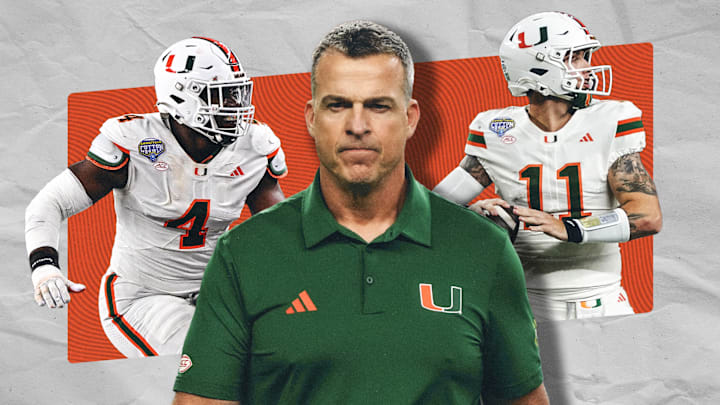
TCU Head Coach Sonny Dykes on Raising Expectations and Chasing the CFP | Sports Illustrated
Typically if you follow the paper trail, you’ll see which college football teams are the most successful, but when it comes to the College Football Playoff, that isn’t necessarily true. Aside from the ACC and teams named Notre Dame, the money made in the CFP by participating conferences usually gets distributed to all the conference teams regardless of how their season went.
The SEC uses a hybrid model, but the Big Ten, every team gets their fair share. The ACC is the only Power 4 conference that gives the participating schools all the money they earned by being one of the top 12 teams in the country. It’s a model some of the others might adopt as well if the top schools put pressure on them. That said, how exactly do the payouts work, how much money does each conference get and how much more do the schools that played in the CFP get over the teams that missed? Here’s a deep dive into how the money is paid out.
How much does each team get for making the College Football Playoff?
- Each CFP participant earns $4 million
- Every team in the CFP quarterfinal gets an addition $4 million
- Every semifinal team receives $6 million
- Both national title teams receive $6 million
How far each team advances determines how much they get. Just for making the CFP, all 12 teams receive $4 million each. You get an additional $4 million for reaching the quarterfinals. That means Indiana, Texas Tech, Ohio State and Georgia each received $8 million before playing a game.
The teams that reach the semifinals each get an additional $6 million and another $6 million for playing in the national championship game. Here’s what the current payouts are for the semifinals round.
| Team | Money Earned in CFP (So Far) |
|---|---|
| Tulane Green Wave | $4 million |
| Texas A&M Aggies | $4 million |
| Oklahoma Sooners | $4 million |
| James Madison Dukes | $4 million |
| Texas Tech Red Raiders | $8 million |
| Georgia Bulldogs | $8 million |
| Ohio State Buckeyes | $8 million |
| Alabama Crimson Tide | $8 million |
| Indiana Hoosiers | $14 million |
| Oregon Ducks | $14 million |
| Miami Hurricanes | $14 million |
| Ole Miss Rebels | $14 million |
*All dollar amounts reflect up to the CFP semifinals round
For reaching the national championship game, the most you can receive is $20 million. Teams like Notre Dame collect that whole pot thanks to being independent teams and not affiliated with a conference. The ACC adopts the same model However, the Big 12, SEC and Big Ten split that money across the conference teams.
So Oregon, Indiana or Ole Miss won’t receive the whole $20 million for reaching the title game. In addition, every team gets a $3 million travel stipend each round they advance to.
Who actually receives the College Football Playoff payouts
When the CFP pays out the teams that reach the 12-team playoff, it actually doesn’t go directly to the teams. Instead, it goes to the conference to distribute to its teams based on their policies. In cases like Notre Dame, which is an independent team and not affiliated to a conference, the money would then go to the school’s athletic department.
How each power conference distributes the CFP money received
- The SEC has a hybrid model where a chunk of the money goes to participating teams with money left over going to the other conference teams
- The Big Ten and Big 12 distribute the money evenly across the conference teams
- The ACC gives the CFP teams all the money, with none going to other conference teams
The irony of the payout model is that the ACC, which was the weakest of the CFP participating conferences, gets the most money of the power conferences. The Big Ten and Big 12 teams get the fewest amount with the money getting evenly distributed to the teams. The SEC’s model is the most complex and the most interesting.
For SEC teams, the CFP teams get a portion of the money with leftover money getting sent to the other conference teams. According to a story on Front Office Sports, here are the payouts based on this year’s field:
- The teams that played in the first round each received $3 million with a “travel allowance, determined by the SEC executive committee”
- Quarterfinal teams receive $3.5 million
- Semifinals teams receive $3.75 million
- $4 million for playing in the CFP national championship game
Essentially if the pot is $20 million per team for reaching the title game, SEC teams that play get roughly $14.25 million. In this case, the remaining $5.75 million would get distributed to the rest of the conference.
For the American conference, they have a similar model with the teams that participate in the CFP, getting a bigger cut. This year, Tulane received more than 75 percent of the money given for getting into the CFP with the rest going to the conference.
Why the ACC’s CFP payout model is different than every other conference
The reason the ACC started giving the CFP teams all the money was due to a lawsuit by both Clemson and Florida State against the conference because they “were trapped in deteriorating media rights deals”, according to The Miami Hurricane, while also being handicapped by lucrative buyouts to leave the ACC.
The ACC has the lowest media rights deal compared to the SEC and Big Ten, sitting at $4.8 billion, the SEC is at $7.1 billion and the Big Ten at $8 billion. This was the conference’s way to bridge the gap between the media rights disparity, The Miami Hurricane added. So while it feels like it’s a bump up from the other conferences, it actually still puts ACC teams behind the two biggest power conferences as they still get significantly less from their media rights deals.
More College Football news and analysis
•
12 games that will decide the College Football Playoff before November
•
Jayden Maiava is the right QB for Lincoln Riley to crack the CFP at USC
•
Toughest college football schedules and how they’ll impact the CFP
•
The first College Football Playoff elimination game might happen in Week Zero
•
College football rankings by initial strength of schedule: Texas faces uphill climb
 Add us as a preferred source on Google
3 reasons why the Memphis Tigers will shine in 2026
Memphis had a lot of roster turnover and a new coach come in, yet they just might be stronger in 2026 than in years past.
ByWynston Wilcox|Aug 27, 2026
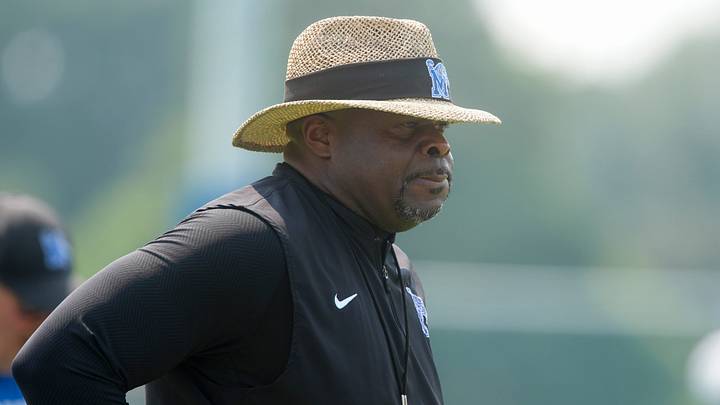
Memphis was a favorite to crash the 12-team College Football Playoff last season, but with losses to UAB and Tulane. The Tigers ended the year with three-straight regular season losses and a bowl game loss to NC State. That was in the Ryan Silverfield era, though. Now Charles Huff is in charge and if you haven’t been following Memphis football, there’s a lot of excitement within the city around this season. Between the transfer portal additions and his ability to rebuild smaller programs, Memphis might be in a better position this year than they were a year ago. Here’s three reasons why you should buy into the Tigers in 2026.
Charles Huff couldn’t be a better fit for Memphis football
Look at how he turned around Marshall and Southern Mississippi. At Marshall, he had a 32-20 record, including winning a conference championship and knocking off Notre Dame during his tenure. In his lone season at Southern Miss, he turned them from a one-win team to reaching a bowl game at 7-5. Though the Golden Eagles lost four-straight games to end the season, the fact that they didn’t have any FBS wins the season before Huff got there and started the year 7-2 goes to show just how good he really is.
He’s a good coach for Memphis because they aren’t the project like the two programs he previously coached. They’re on the cusp of being a mainstay in the CFP conversation as a Group of 6 team and one of the most talked about teams when it comes to conference realignment conversations. Huff feels like the coach that is good enough to get them over that hump in both categories.
If there’s any season you should be all in on Memphis, it’s this year. It’s not just about the quality of the team, it’s about the coach they added to replace Silverfield that’s going to continue elevating this program.
The roster overhaul should set Memphis up for success
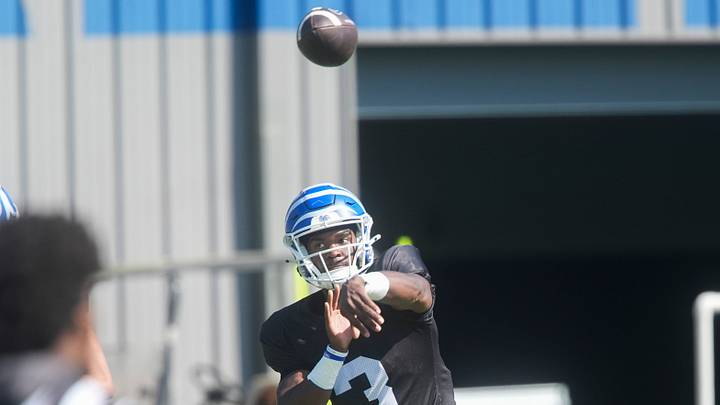
Memphis lost quite a bit from last year’s roster but Huff did a good job in bringing in talent to replace the outgoing transfers. Air Noland and Marcus Stokes, an FCS transfer, are in a tight battle and either option feels like a good one. Noland is a former five-star quarterback that’s hopped around but hasn’t really found the team for him to grow into; Memphis could be that. One of the biggest moves was adding Dallan Hayden.
Hayden is from Memphis and that addition alone proves just how much in tune with Memphis, Huff is. He wasn’t able to carve out a significant role in his two seasons in Colorado and was stuck behind Tre’Veyon Henderson and Miyan Williams for two seasons at Ohio State. He’s talented and should be a big replacement for Sutton Smith in the backfield, who followed Silverfield to Arkansas.
The rest of the roster, though balanced with additions in the transfer portal, will have to work through kinks, but Huff put this roster together so there’s something to be said about how he’ll be able to get the most out of his team.
They’re still one of the strongest teams in the American Conference
When you look at the rest of the American Conference, Memphis shouldn’t have any problems in conference play. Tulane, though they’ll be a threat as always in the conference, lost their coach and quite a bit from last year’s squad that reached the College Football Playoff so it opens the door for Memphis to take over. North Texas and USF also lost quite a bit from their teams last season with coaching changes as well.
Memphis doesn’t have as many preseason All-conference players with most of their representation coming from the defensive side of the ball. That said, it doesn’t really mean much until teams play. Memphis will be one of the better teams in the conference and though they were hit with a massive coaching change and roster turnover, they’re the best equipped to bounce back the best.
Anything can happen in the American Conference and last year was the perfect example of that. That’s why all the preseason attention being off of Memphis could be the very reason why they finally prove they’re one of the top G6 teams in college football.
More College Football news and analysis
•
Lane Kiffin became a villain again: Now he’s looking to change the narrative at LSU
•
College football’s highest-paid NIL players and who’s actually worth the money
•
How long until Mike Norvell is fired? FSU coach’s buyout, hot seat and potential outlook
•
College football winners and losers from Week 0: Belichick vs. Dykes, Norvell vs. the hot seat
•
Enjoyed college football’s Week 0? It’s about to go away forever
Add us as a preferred source on Google
- About
- Contact
- Openings
- FanSided Network
- A-Z Index
- Sitemap
- Newsletters
- Pitch a Story
- Privacy Policy
- Terms of Use
- Cookie Policy
- Legal Disclaimer
- Accessibility Statement
- Your Privacy Choices
© 2026 Minute Group – All Rights Reserved. The content on this site is for entertainment and educational purposes only. Betting and gambling content is intended for individuals 21+ and is based on individual commentators’ opinions and not that of Minute Group or its affiliates and related brands. All picks and predictions are suggestions only and not a guarantee of success or profit. If you or someone you know has a gambling problem, crisis counseling and referral services can be accessed by calling 1-800-GAMBLER.
We’d like to send you some notifications
Notifications can be turned off anytime from browser settingsAllowDismissSkip to main content
College Football Playoff payouts, explained: Who gets paid and how much
It pays to get to the College Football Playoff, but exactly how much? Here’s how each conference deals with winnings from their teams reaching the CFP.
ByWynston Wilcox|Jan 8, 2026
TCU Head Coach Sonny Dykes on Raising Expectations and Chasing the CFP | Sports Illustrated
Typically if you follow the paper trail, you’ll see which college football teams are the most successful, but when it comes to the College Football Playoff, that isn’t necessarily true. Aside from the ACC and teams named Notre Dame, the money made in the CFP by participating conferences usually gets distributed to all the conference teams regardless of how their season went.
The SEC uses a hybrid model, but the Big Ten, every team gets their fair share. The ACC is the only Power 4 conference that gives the participating schools all the money they earned by being one of the top 12 teams in the country. It’s a model some of the others might adopt as well if the top schools put pressure on them. That said, how exactly do the payouts work, how much money does each conference get and how much more do the schools that played in the CFP get over the teams that missed? Here’s a deep dive into how the money is paid out.
How much does each team get for making the College Football Playoff?
- Each CFP participant earns $4 million
- Every team in the CFP quarterfinal gets an addition $4 million
- Every semifinal team receives $6 million
- Both national title teams receive $6 million
How far each team advances determines how much they get. Just for making the CFP, all 12 teams receive $4 million each. You get an additional $4 million for reaching the quarterfinals. That means Indiana, Texas Tech, Ohio State and Georgia each received $8 million before playing a game.
The teams that reach the semifinals each get an additional $6 million and another $6 million for playing in the national championship game. Here’s what the current payouts are for the semifinals round.
| Team | Money Earned in CFP (So Far) |
|---|---|
| Tulane Green Wave | $4 million |
| Texas A&M Aggies | $4 million |
| Oklahoma Sooners | $4 million |
| James Madison Dukes | $4 million |
| Texas Tech Red Raiders | $8 million |
| Georgia Bulldogs | $8 million |
| Ohio State Buckeyes | $8 million |
| Alabama Crimson Tide | $8 million |
| Indiana Hoosiers | $14 million |
| Oregon Ducks | $14 million |
| Miami Hurricanes | $14 million |
| Ole Miss Rebels | $14 million |
*All dollar amounts reflect up to the CFP semifinals round
For reaching the national championship game, the most you can receive is $20 million. Teams like Notre Dame collect that whole pot thanks to being independent teams and not affiliated with a conference. The ACC adopts the same model However, the Big 12, SEC and Big Ten split that money across the conference teams.
So Oregon, Indiana or Ole Miss won’t receive the whole $20 million for reaching the title game. In addition, every team gets a $3 million travel stipend each round they advance to.
Who actually receives the College Football Playoff payouts
When the CFP pays out the teams that reach the 12-team playoff, it actually doesn’t go directly to the teams. Instead, it goes to the conference to distribute to its teams based on their policies. In cases like Notre Dame, which is an independent team and not affiliated to a conference, the money would then go to the school’s athletic department.
How each power conference distributes the CFP money received
- The SEC has a hybrid model where a chunk of the money goes to participating teams with money left over going to the other conference teams
- The Big Ten and Big 12 distribute the money evenly across the conference teams
- The ACC gives the CFP teams all the money, with none going to other conference teams
The irony of the payout model is that the ACC, which was the weakest of the CFP participating conferences, gets the most money of the power conferences. The Big Ten and Big 12 teams get the fewest amount with the money getting evenly distributed to the teams. The SEC’s model is the most complex and the most interesting.
For SEC teams, the CFP teams get a portion of the money with leftover money getting sent to the other conference teams. According to a story on Front Office Sports, here are the payouts based on this year’s field:
- The teams that played in the first round each received $3 million with a “travel allowance, determined by the SEC executive committee”
- Quarterfinal teams receive $3.5 million
- Semifinals teams receive $3.75 million
- $4 million for playing in the CFP national championship game
Essentially if the pot is $20 million per team for reaching the title game, SEC teams that play get roughly $14.25 million. In this case, the remaining $5.75 million would get distributed to the rest of the conference.
For the American conference, they have a similar model with the teams that participate in the CFP, getting a bigger cut. This year, Tulane received more than 75 percent of the money given for getting into the CFP with the rest going to the conference.
Why the ACC’s CFP payout model is different than every other conference
The reason the ACC started giving the CFP teams all the money was due to a lawsuit by both Clemson and Florida State against the conference because they “were trapped in deteriorating media rights deals”, according to The Miami Hurricane, while also being handicapped by lucrative buyouts to leave the ACC.
The ACC has the lowest media rights deal compared to the SEC and Big Ten, sitting at $4.8 billion, the SEC is at $7.1 billion and the Big Ten at $8 billion. This was the conference’s way to bridge the gap between the media rights disparity, The Miami Hurricane added. So while it feels like it’s a bump up from the other conferences, it actually still puts ACC teams behind the two biggest power conferences as they still get significantly less from their media rights deals.
More College Football news and analysis
•
12 games that will decide the College Football Playoff before November
•
Jayden Maiava is the right QB for Lincoln Riley to crack the CFP at USC
•
Toughest college football schedules and how they’ll impact the CFP
•
The first College Football Playoff elimination game might happen in Week Zero
•
College football rankings by initial strength of schedule: Texas faces uphill climb
Add us as a preferred source on Google
3 reasons why the Memphis Tigers will shine in 2026
Memphis had a lot of roster turnover and a new coach come in, yet they just might be stronger in 2026 than in years past.
ByWynston Wilcox|Aug 27, 2026
Memphis was a favorite to crash the 12-team College Football Playoff last season, but with losses to UAB and Tulane. The Tigers ended the year with three-straight regular season losses and a bowl game loss to NC State. That was in the Ryan Silverfield era, though. Now Charles Huff is in charge and if you haven’t been following Memphis football, there’s a lot of excitement within the city around this season. Between the transfer portal additions and his ability to rebuild smaller programs, Memphis might be in a better position this year than they were a year ago. Here’s three reasons why you should buy into the Tigers in 2026.
Charles Huff couldn’t be a better fit for Memphis football
Look at how he turned around Marshall and Southern Mississippi. At Marshall, he had a 32-20 record, including winning a conference championship and knocking off Notre Dame during his tenure. In his lone season at Southern Miss, he turned them from a one-win team to reaching a bowl game at 7-5. Though the Golden Eagles lost four-straight games to end the season, the fact that they didn’t have any FBS wins the season before Huff got there and started the year 7-2 goes to show just how good he really is.
He’s a good coach for Memphis because they aren’t the project like the two programs he previously coached. They’re on the cusp of being a mainstay in the CFP conversation as a Group of 6 team and one of the most talked about teams when it comes to conference realignment conversations. Huff feels like the coach that is good enough to get them over that hump in both categories.
If there’s any season you should be all in on Memphis, it’s this year. It’s not just about the quality of the team, it’s about the coach they added to replace Silverfield that’s going to continue elevating this program.
The roster overhaul should set Memphis up for success
Memphis lost quite a bit from last year’s roster but Huff did a good job in bringing in talent to replace the outgoing transfers. Air Noland and Marcus Stokes, an FCS transfer, are in a tight battle and either option feels like a good one. Noland is a former five-star quarterback that’s hopped around but hasn’t really found the team for him to grow into; Memphis could be that. One of the biggest moves was adding Dallan Hayden.
Hayden is from Memphis and that addition alone proves just how much in tune with Memphis, Huff is. He wasn’t able to carve out a significant role in his two seasons in Colorado and was stuck behind Tre’Veyon Henderson and Miyan Williams for two seasons at Ohio State. He’s talented and should be a big replacement for Sutton Smith in the backfield, who followed Silverfield to Arkansas.
The rest of the roster, though balanced with additions in the transfer portal, will have to work through kinks, but Huff put this roster together so there’s something to be said about how he’ll be able to get the most out of his team.
They’re still one of the strongest teams in the American Conference
When you look at the rest of the American Conference, Memphis shouldn’t have any problems in conference play. Tulane, though they’ll be a threat as always in the conference, lost their coach and quite a bit from last year’s squad that reached the College Football Playoff so it opens the door for Memphis to take over. North Texas and USF also lost quite a bit from their teams last season with coaching changes as well.
Memphis doesn’t have as many preseason All-conference players with most of their representation coming from the defensive side of the ball. That said, it doesn’t really mean much until teams play. Memphis will be one of the better teams in the conference and though they were hit with a massive coaching change and roster turnover, they’re the best equipped to bounce back the best.
Anything can happen in the American Conference and last year was the perfect example of that. That’s why all the preseason attention being off of Memphis could be the very reason why they finally prove they’re one of the top G6 teams in college football.
More College Football news and analysis
•
Lane Kiffin became a villain again: Now he’s looking to change the narrative at LSU
•
College football’s highest-paid NIL players and who’s actually worth the money
•
How long until Mike Norvell is fired? FSU coach’s buyout, hot seat and potential outlook
•
College football winners and losers from Week 0: Belichick vs. Dykes, Norvell vs. the hot seat
•
Enjoyed college football’s Week 0? It’s about to go away forever
Add us as a preferred source on Google
- About
- Contact
- Openings
- FanSided Network
- A-Z Index
- Sitemap
- Newsletters
- Pitch a Story
- Privacy Policy
- Terms of Use
- Cookie Policy
- Legal Disclaimer
- Accessibility Statement
- Your Privacy Choices
© 2026 Minute Group – All Rights Reserved. The content on this site is for entertainment and educational purposes only. Betting and gambling content is intended for individuals 21+ and is based on individual commentators’ opinions and not that of Minute Group or its affiliates and related brands. All picks and predictions are suggestions only and not a guarantee of success or profit. If you or someone you know has a gambling problem, crisis counseling and referral services can be accessed by calling 1-800-GAMBLER.
We’d like to send you some notifications
Notifications can be turned off anytime from browser settingsAllowDismiss