
TOP 40 “ONE HIT WONDERS”
Skip to main contentSkip to site footer
Ultimate Classic Rock RadioUltimate Classic Rock Radio
Search The Site
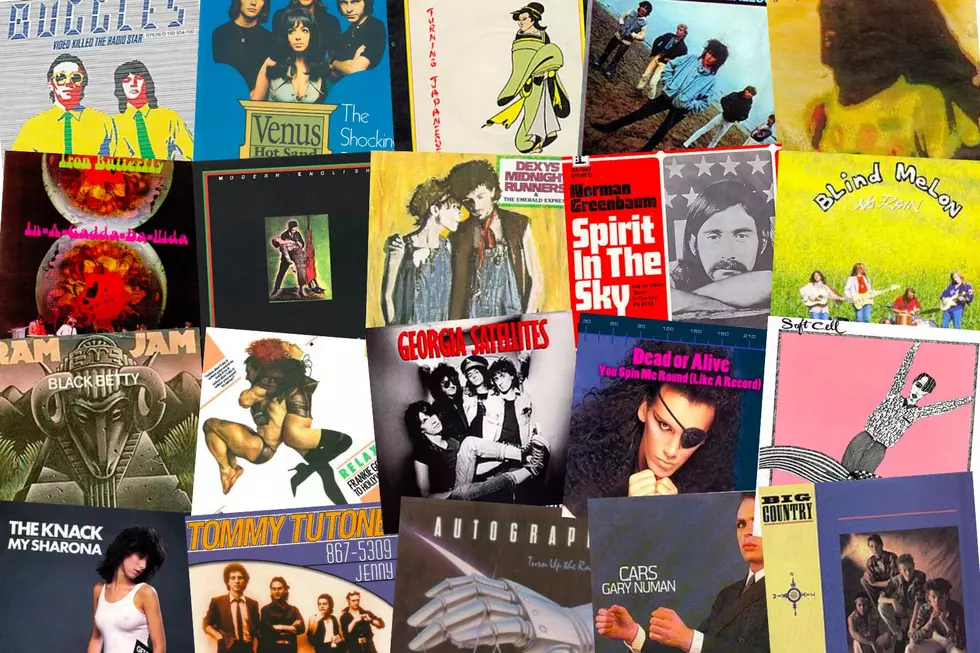
40 Biggest One-Hit Wonders
Corey IrwinUpdated: September 25, 2025UCR
| Play The Buggleson Amazon Music Unlimited (ad) |
Just because an artist gets labeled a one-hit wonder, that doesn’t mean their impact on music is so easily forgotten. Many timeless and classic songs have been written and recorded by artists who enjoyed only one mainstream hit.
In the below list of 40 Biggest One-Hit Wonders, we consider a song’s commercial success as well as how it’s endured. The ‘80s are well-represented. The decade seemed to breed a large amount of one-hit wonders, many of whom rode the emerging new wave genre. Nine of our Top 10 one-hit wonders come from that decade, but the ‘60s, ‘70s and ‘90s still landed songs elsewhere on the list.
40. Cutting Crew, “I Just Died in Your Arms Tonight”
This chart-topping 1986 hit wasn’t inspired by a near-death experience but a sexual one. Cutting Crew singer Nick Van Eede came up with the song’s chorus after a one-night tryst with a former girlfriend. “We got back together for one night after a year apart, and I guess there were some fireworks but all the time tinged with a feeling of, ‘Should I really be doing this?”” the singer later recalled. The power ballad struck a chord with music fans and reached No. 1 on the Billboard Hot 100. As a debut single, Cutting Crew couldn’t have asked for a bigger introduction to the world, but with success came pressure. Cracks began to surface when none of their follow-up singles met commercial expectations. A battle with management kept the band’s sophomore album from coming out until 1989. It bombed, and by 1993 the group had disbanded.
Cutting Crew – (I Just) Died In Your Arms (Official Music Video)
Subscribe to Ultimate Classic Rock on https://www.youtube.com/subscribe_embed?usegapi=1&channel=UltClassicRock&count=hidden&layout=default&theme=default&origin=https%3A%2F%2Fultimateclassicrock.com&gsrc=3p&jsh=m%3B%2F_%2Fscs%2Fabc-static%2F_%2Fjs%2Fk%3Dgapi.lb.en.zhTT8Br0Ho8.O%2Fd%3D1%2Frs%3DAHpOoo-7LeULGjNQZRvhdu3G71akb6JY6A%2Fm%3D__features__#_methods=onPlusOne%2C_ready%2C_close%2C_open%2C_resizeMe%2C_renderstart%2Concircled%2Cdrefresh%2Cerefresh&id=I5_1788377926185&_gfid=I5_1788377926185&parent=https%3A%2F%2Fultimateclassicrock.com&pfname=&rpctoken=28136862
39. Toni Basil, “Mickey”
The song as infectious as a pep rally – so much so that its music video was cheerleader-themed – “Mickey” burrowed its way into listeners’ ears in January 1982. The track had originally been released by the British band Racey, but that version used the name “Kitty” instead of “Mickey” and didn’t include the song’s catchy “You’re so fine, you blow my mind” chant. Singer Toni Basil, who started her career as a choreographer after being a, yes, cheerleader in her youth, brought “Mickey” to life. The song hit No. 1 in the U.S. and was certified platinum, but Basil never came close to that success with any of her other songs.
TONI BASIL – Mickey
Subscribe to Ultimate Classic Rock on https://www.youtube.com/subscribe_embed?usegapi=1&channel=UltClassicRock&count=hidden&layout=default&theme=default&origin=https%3A%2F%2Fultimateclassicrock.com&gsrc=3p&jsh=m%3B%2F_%2Fscs%2Fabc-static%2F_%2Fjs%2Fk%3Dgapi.lb.en.zhTT8Br0Ho8.O%2Fd%3D1%2Frs%3DAHpOoo-7LeULGjNQZRvhdu3G71akb6JY6A%2Fm%3D__features__#_methods=onPlusOne%2C_ready%2C_close%2C_open%2C_resizeMe%2C_renderstart%2Concircled%2Cdrefresh%2Cerefresh&id=I0_1788377916001&_gfid=I0_1788377916001&parent=https%3A%2F%2Fultimateclassicrock.com&pfname=&rpctoken=21367985
38. The Knack, “My Sharona”
Should the Knack be considered a two-hit wonder? An argument can be made. After all, their single “Good Girls Don’t” reached No. 11 on the Billboard chart, meaning they qualify for this list by the slimmest of margins. Still, ask the average music fan to sing a line from “Good Girls Don’t” and they’ll likely stare back with a blank face. Ask them for a part from “My Sharona” and you’ll likely get a rousing, “My, my, my, I, yi, woo!” The 1979 single was an instant classic, Capitol Records’ fastest single to be certified gold since the Beatles’ “I Want to Hold Your Hand.” The Knack’s frontman, Doug Fieger, wrote “My Sharona” after falling for a woman named Sharona, who appeared on the single’s cover. While their relationship didn’t last, the two reportedly remained close friends up until Fieger died in 2010.
The Knack – My Sharona
Subscribe to Ultimate Classic Rock on https://www.youtube.com/subscribe_embed?usegapi=1&channel=UltClassicRock&count=hidden&layout=default&theme=default&origin=https%3A%2F%2Fultimateclassicrock.com&gsrc=3p&jsh=m%3B%2F_%2Fscs%2Fabc-static%2F_%2Fjs%2Fk%3Dgapi.lb.en.zhTT8Br0Ho8.O%2Fd%3D1%2Frs%3DAHpOoo-7LeULGjNQZRvhdu3G71akb6JY6A%2Fm%3D__features__#_methods=onPlusOne%2C_ready%2C_close%2C_open%2C_resizeMe%2C_renderstart%2Concircled%2Cdrefresh%2Cerefresh&id=I1_1788377918263&_gfid=I1_1788377918263&parent=https%3A%2F%2Fultimateclassicrock.com&pfname=&rpctoken=34920742
37. After the Fire, “Der Kommissar”
Austrian singer Falco deserves an honorable mention. His 1985 hit “Rock Me Amadeus” didn’t get enough votes from our writers to crack our Top 40, but he has a part in “Der Kommissar”: He released the original version of the hit song. His single, released in 1981, was sung in German and received just a little attention in the U.S. A year later the U.K. band After the Fire covered the song in English, scoring the only hit of their career. Success arrived too late for the band. After the Fire, which had been together since 1982, was crumbling as “Der Kommissar” was climbing the charts. The group had already broken up by the time the song peaked at No. 5 on the Billboard Hot 100.
After The Fire – Der Kommissar
Subscribe to Ultimate Classic Rock on https://www.youtube.com/subscribe_embed?usegapi=1&channel=UltClassicRock&count=hidden&layout=default&theme=default&origin=https%3A%2F%2Fultimateclassicrock.com&gsrc=3p&jsh=m%3B%2F_%2Fscs%2Fabc-static%2F_%2Fjs%2Fk%3Dgapi.lb.en.zhTT8Br0Ho8.O%2Fd%3D1%2Frs%3DAHpOoo-7LeULGjNQZRvhdu3G71akb6JY6A%2Fm%3D__features__#_methods=onPlusOne%2C_ready%2C_close%2C_open%2C_resizeMe%2C_renderstart%2Concircled%2Cdrefresh%2Cerefresh&id=I2_1788377918279&_gfid=I2_1788377918279&parent=https%3A%2F%2Fultimateclassicrock.com&pfname=&rpctoken=40525431
36. Gary Numan, “Cars”
Gary Numan had enjoyed success with the new wave group Tubeway Army, which scored a U.K. hit with their 1979 single “Are ‘Friends’ Electric?” That same year, Numan broke out as a solo act, scoring a worldwide hit with his debut single, “Cars.” The song, inspired by a bout of road rage, found Numan embracing a poppier approach to songwriting. “This was the first time I had written a song with the intention of, ‘Maybe it could be a hit single,’” the singer admitted. “Cars” hit No. 9 in the U.S. and No. 1 in the U.K. While Numan has enjoyed a respected career ever since, he’s never again had a hit single.
35. Mungo Jerry, “In the Summertime”
When you think “sound of summer” you don’t usually think “jug band.” But that’s exactly the style of music Mungo Jerry used in their 1970 hit. Reportedly written by singer Ray Dorset in just 10 minutes, the breezy track perfectly captures that time of year when “the weather is high.” It reached No. 3 on the Billboard Hot 100 chart, the only Mungo Jerry song to earn mainstream attention in the States.
34. Kajagoogoo, “Too Shy”
English new wave group Kajagoogoo had been together for roughly five years – under the name Art Nouveau at first – before signing their first record deal in 1982. They struck gold with their debut single, “Too Shy,” which was produced by Duran Duran’s Nick Rhodes. The band’s label had pushed against the track, claiming it was too dark. “They wanted to release what they considered to be a brighter, poppier track,” bassist Nick Beggs later recalled. Kajagoogoo looked poised for a bright career when, in 1983, “Too Shy” went Top 5 in 12 countries, including the U.S. While follow-up singles “Ooh to Be Aah” and “Hang on Now” did well in the U.K., neither registered in the U.S. The band broke up at the end of 1985, but “Too Shy” has remained a time capsule of the era, included in everything from the soundtrack to The Wedding Singer to the video game Grand Theft Auto: Vice City Stories.
33. Peter Schilling, “Major Tom”
Here’s a rare occurrence where an artist created a sequel to someone else’s song. Singer Peter Schilling based “Major Tom” on a character first created by David Bowie for the 1969 single “Space Oddity.” Schilling’s song kept up the interplanetary theme, with its chorus: “Earth below us / Drifting, falling / Floating weightless / Calling, calling home.” Released in 1983, “Major Tom” reached No. 14 on the Billboard Hot 100, the only song of Schilling’s career to chart in the U.S.
32. The Crazy World of Arthur Brown, “Fire”
With a demonic spoken word opening in which frontman Arthur Brown declared himself the “god of Hellfire,” “Fire” hardly seemed like the type of song that would find mainstream success. But the psychedelic rock track managed to ignite something in fans. The 1968 single hit No. 1 in the U.K. and No. 2 in the U.S., making it the Crazy World of Arthur Brown’s most successful single. The group broke up in 1970 but returned in 2000, with material arriving sporadically ever since.
31. Georgia Satellites, “Keep Your Hands to Yourself”
They may be a one-hit wonder, but Georgia Satellites sure made an impact with their only mainstream single. When “Keep Your Hands to Yourself” reached No. 2 on the Billboard Hot 100 in 1987 – held out of the top spot by Bon Jovi’s “Livin’ on a Prayer” – the heavy-hitting song proved that southern rock could still thrive, while also inspiring heavier guitars in country songs. “Somebody made the comment that it was the song that saved rock ‘n’ roll and ruined country music at the same time,” singer Dan Baird once admitted to Rolling Stone. “It meant it brought rock ‘n’ roll back to its roots for a few minutes, but it turned the corner on country being afraid of dumb loud guitars.”
30. Shocking Blue, “Venus”
Dutch rock group Shocking Blue had a few hits in their homeland in the late ‘60s, but it was 1969’s “Venus” that brought international attention. The song, with its strummy guitar and groovy organ, climbed to No. 1 on the Billboard Hot 100. Even though the band never came close to such heights again, “Venus” sold more than 5 million copies around the world and continues to be popular, appearing in everything from The Queen’s Gambit to a long-running advertising campaign for Gillette, whose women’s line of razors is called Venus.
29. The Vapors, “Turning Japanese”
During the new wave boom of the late ’70s and early ‘80s, it seemed like another new wave act was arriving from the U.K. each week. Among them was the Vapors, a quartet from Surrey that released their debut album, New Clear Days, in 1980. The lead single, “Turning Japanese,” was built on a Japanese-sounding motif, but the catchy song’s narrative was often misinterpreted. “It was intended purely as a love song,” singer Dave Fenton later explained. “The protagonist is sitting in his bedroom, which has become like a prison cell, pining over a photograph of his ex-girlfriend.” “Turning Japanese” became the Vapors’ only hit, and by 1982 the band was over. “When people ask if the song’s become an albatross, I say no,” Fenton admitted. “I’m pleased it happened to us. I’d rather be a one-hit wonder than a no-hit wonder.”
28. Wild Cherry, “Play That Funky Music”
Wild Cherry began life as a hard rock cover band in the Pittsburgh area. As the ‘70s rolled on, the group found it more difficult to book gigs, as disco and dance tunes had overtaken rock in popularity. “One night, I got the band in the dressing room and I told them, ‘We’ve got to play more of this disco stuff,’” singer Rob Parissi recalled. “They went nuts: ‘We don’t want to be a disco band.’” At one of Wild Cherry’s shows, a Black audience member asked, “Are you white boys going to play some funky music?” An idea was spawned. “Play That Funky Music” became a No. 1 single in 1976, reaching multiplatinum sales and earning Wild Cherry a pair of Grammy nominations. After failing to follow up “Play That Funky Music” with another hit, they broke up in 1979.
27. The Ides of March, “Vehicle”
It’s hard to deny the gravitational pull of “Vehicle” when those horns kick in. The 1970 single was a breakout hit for the Ides of March, peaking at No. 2 on the Billboard Hot 100. After years of touring around their native Illinois, “Vehicle” elevated the Ides of March to national touring act. The band shared the stage with such luminaries as Jimi Hendrix, Janis Joplin and Led Zeppelin, but they were never able to score another hit. Even after ditching the brass section and trying to move in a new stylistic direction, nothing seemed to click. The Ides of March broke up in 1973, but the band’s singer and co-founder, Jim Peterik, had a more successful second act when he founded Survivor in 1978 and scored several big hits in the ‘80s.
26. The Proclaimers, “I’m Gonna Be (500 Miles)”
With their pasty, clean-cut and spectacled look, twin brothers Charlie and Craig Reid hardly looked the part of chart-topping rock stars. Still, the Irish duo had a songwriting gift, including a knack for pop hooks. In 1988 their group the Proclaimers released the album Sunshine on Leith, featuring “I’m Gonna Be (500 Miles).” The song hit first in the U.K., where it reached No. 11. Five years later it caught on in the U.S. thanks to its inclusion in the romantic comedy Benny & Joon. Rereleased as a single, “I’m Gonna Be (500 Miles)” peaked at No. 3 on the Billboard Hot 100.
25. The Contours, “Do You Love Me”
“Do You Love Me” was written by Motown Records founder Berry Gordy Jr., who had intended to give it to the Temptations to record. But the Temptations weren’t in the studio when Gordy went there, so he offered it to another Motown vocal group, the Contours. The group cemented its place in music history with “Do You Love Me.” The song remains a favorite at weddings, birthdays and bar mitzvahs.
24. Iron Butterfly, “In-A-Gadda-Da-Vidda”
It’s messy, there are mistakes in the recording and it’s words are difficult to understand – it was supposed to be “In the Garden of Eden.” But there’s something gloriously indulgent about “In-A-Gadda-Da-Vida.” Running more than 17 minutes, the song is a long and winding psychedelic trip, complete with drums, guitar and soaring organ parts. Even though Iron Butterfly would never score another hit following this 1968 single, “In-A-Gadda-Da-Vida” remains a cultural tentpole, appearing everywhere from The Simpsons to a popular sample in rap songs.
23. Buckner & Garcia, “Pac-Man Fever”
History is filled with novelty hits but few enjoyed more of a cultural impact than Buckner & Garcia’s “Pac-Man Fever.” The 1981 single was recorded in response to the popular video game, which became a phenomenon across the globe in 1980. Jerry Buckner and Gary Garcia were jingle writers from Akron and witnessed the excitement surrounding Pac-Man firsthand. “Pac-Man” fever reached No. 9 on the Billboard Hot 100 and inspired the duo to record an entire album of video game-inspired songs, including “Do the Donkey Kong,” “Ode to Centipede” and “Froggy’s Lament.” Lightning didn’t strike twice, and “Pac-Man Fever” remained their only hit.
22. Men Without Hats, “The Safety Dance”
“The Safety Dance” was written by Men Without Hats singer Ivan Doroschuk after he’d been thrown out of a club for “pogoing,” the bouncing new wave dance not always accepted by concerned staff. “I was kind of mad that they wouldn’t let me dance if I wanted to, so I took matters in my own hands and wrote an anthem for it,” he later recalled. Doroschuk never expected “The Safety Dance” to become a hit, but something about the song clicked with audiences. “I think people can relate to the empowering kind of message of ‘The Safety Dance’: ‘You can dance if you want to,’” Doroschuk explained in a later interview. “And when the song first came out, it was the beginning of rap, and it was one of the only songs that had a spoken thing to it.”
21. The Church, “Under the Milky Way”
“Under the Milky Way” proved to be both a blessing and a curse for the Australian band the Church. The 1988 single became the group’s biggest international hit, introducing them to a larger audience and taking them on tours around the world. But there were plenty of drawbacks. “The guys in the band all hated each other, and they all hated me,” singer Steve Kilbey explained in 2018. “Instead of being grateful that I’d written this song which had dragged them into the spotlight they were sort of envious and miserable about it as well.” Even though the Church has enjoyed a career spanning more than four decades, “Under the Milky Way” remains its only U.S. hit.
20. Carl Douglas, “Kung Fu Fighting”
Carl Douglas was born in Jamaica and raised in England. Neither nation, it should be noted, is known for its contributions to martial arts. Still, that didn’t stop Douglas from tapping into the popularity of Kung Fu movies in the ‘70s with his song “Kung Fu Fighting.” The track was recorded in just 10 minutes and was meant to be the B-side of a single. “I went over the top on the ‘huhs’ and the ‘hahs’ and the chopping sounds,” producer Biddu recalled. “It was a B-side; who was going to listen?” As it turned out, lots of people. “Kung Fu Fighting” topped charts across the globe in 1974, selling more than 11 million copies worldwide. Douglas tried to capitalize on the track’s popularity by recording a similar song, “Dance the Kung Fu,” but it didn’t receive the same excitement. He never scored another hit, but “Kung Fu Fighting” has remained omnipresent, used in TV shows and movies such as Dancing With the Stars, Scrubs, Beverly Hills Ninja, Rush Hour and Kung Fu Panda.
19. Dead or Alive, “You Spin Me Round (Like a Record)”
Liverpool group Dead or Alive had already made some noise in the U.K.’s dance scene when they released their 1984 single “You Spin Me Round (Like a Record).” The track catapulted them onto the world’s stage, going Top 10 in 15 countries, including a No. 11 peak in the States. Although it would be their only hit, the catchy song would later be covered by a variety of artists, including Jessica Simpson and nu metal band Dope. Rapper Flo Rida also interpolated the song’s chorus for his 2009 hit single with Kesha, “Right Round.”
18. The Penguins, “Earth Angel”
The only thing better than having a hit song is having one on your first try. “Earth Angel” – penned by Curtis Williams, Jesse Belvin and Gaynel Hodge – was released by the Penguins in 1954 as their debut single and became an enormous hit. “Earth Angel” was a demo; vocal group the Penguins had recorded the song in the garage of a cousin to the song’s producer, Dootsie Williams. No overdubs were needed. “Earth Angel” was the Penguin’s only hit, but it sold millions of copies and has been called one of the cornerstone songs of doo-wop.
17. Lipps Inc, “Funkytown”
Anyone complaining about modern music stars being “fabricated” or “industry plants” should take a look back in history. Record producer Steve Greenberg formed Lipps Inc. in 1979 as a vehicle for former beauty queen Cynthia Johnson, who was looking to transition into music. Greenberg loaded a group with session musicians and then wrote a song to break them. “Funkytown” became a massive worldwide hit. Lipps Inc. was never able to replicate the success, and Johnson eventually enjoyed a career second act in gospel music.
16. Steam, “Na Na Hey Hey Kiss Him Goodbye”
Studio musicians Gary DeCarlo, Dale Frashuer and Paul Leka had worked together on various projects for a few years. In 1969, DeCarlo was recording songs with Leka producing when they decided to revisit an old idea. “I started writing while I was sitting at the piano going ‘Na, na, na, na, na, na, na, na.’ … Everything was ‘na na’ when you didn’t have a lyric,” Leka recalled. The result was “Na Na Hey Hey Kiss Him Goodbye,” which they planned to use as a B-side to DeCarlo’s next single, but the record label loved it so much they wanted to make it the favored track. Due to contractual obligations, the single was released under the band name Steam, even though there wasn’t a real group at the time. “Na Na Hey Hey Kiss Him Goodbye” hit No. 1 on the Billboard Hot 100 and has endured as a timeless kiss-off.
15. Chumbawamba, “Tubthumping”
There isn’t anything inherently interesting about Chumbawamba’s “Tubthumping.” The song repeats the same lyrical phrase – “I get knocked down, but I get up again / You’re never gonna keep me down” – a whopping 29 times. The only other lyrics generally cover a list of beverages – whiskey drink, vodka drink, lager drink, cider drink – and the act of “pissing the night away.” But the song was a massive international hit in 1997. It made the Top 10 in 17 different countries, including a peak of No. 6 in the U.S. Critics raved about the song, while its video was plastered all over MTV. But Chumbawamba was a political rock collective whose music sounded little like their one hit. Mainstream success wasn’t their goal, so “Tubthumping” was their only song to chart in the States.
14. Ram Jam, “Black Betty”
That riff, that thumping beat, that “Bam-ba-lam” – there’s no escaping the infectious excitement of Ram Jam’s “Black Betty.” The song began life as a 20th-century African-American work song. Exactly what “Black Betty” is a nickname for has been debated, though the most common theory is a bottle of whiskey. Blues and folk legend Lead Belly recorded a popular a cappella version in 1939. More than 35 years later, New York rock band Ram Jam got their hands on it, turning “Black Betty” into a hard rocking hit. Ram Jam wasn’t able to keep the momentum rolling, as band turmoil quickly brought the group to an end. They broke up in 1978, roughly a year after “Black Betty” was released.
13. Blind Melon, “No Rain”
Blind Melon was on top of the musical mountain in 1993 when their single “No Rain” became a massive hit. The song’s popularity, further enhanced by its beloved “Bee Girl” music video, helped push Blind Melon’s self-titled debut album to multiplatinum sales. With performances opening for the Rolling Stones and a set at Woodstock ‘94, Blind Melon were enjoying the fruits of their success. But their sophomore album, Soup, sold poorly, and just months after its release, frontman Shannon Hoon died of a cocaine overdose at the age of 28. His death brought Blind Melon to a close.
12. Big Country, “In a Big Country”
The ‘80s were all about being big: big hair, big cars and big songs. The Scottish band Big Country scored a massive hit in 1983 with “In a Big Country,” a soaring song about harnessing hope and optimism. With guitar parts engineered to sound like bagpipes, the track sounded unlike anything else on the radio. It reached No. 3 on Billboard’s Mainstream Rock chart and No. 17 on the Hot 100, and its video earned heavy rotation on MTV. It marked a career highwater mark for Big Country, who never again came close to such commercial success.
11. Autograph, “Turn Up the Radio”
Autograph got a head start when they were selected by drummer Keni Richards’ friend David Lee Roth to open 48 shows on Van Halen‘s 1984 tour before releasing an album or even signing a record contract. The attention scored them a deal, and “Turn Up the Radio,” the first single from their debut album Sign In Please, cracked the Top 30. The song’s profile was further boosted by appearances in Miami Vice and several movies. But even after releasing two more albums in the ’80s, the band never broke through to the next level.
10. Norman Greenbaum, “Spirit in the Sky”
After bouncing around bands, Norman Greenbaum became a solo artist in the late ‘60s. He penned “Spirit in the Sky” as a folk song, but producer Erik Jacobsen helped build it into a psychedelic rocker, a song instantly recognizable from its first notes. “I’m just some Jewish musician who really dug gospel music,” Greenbaum explained to Rolling Stone. “I decided there was a larger Jesus gospel market out there than a Jehovah one.” In 1970, “Spirit in the Sky” hit No. 1 in the U.K. and No. 3 in the U.S. Sixteen years later, British glam rock band Doctor and the Medics topped the U.K. chart with a cover. It happened again in 2003 when Gareth Gates reached No. 1 in the U.K. with his rendition. As such, the track has the distinct honor of having been No. 1 in the U.K. three different times by three different artists.
9. Eddy Grant, “Electric Avenue”
After two decades of success in the U.K., both with his band the Equals and as a solo act, Eddy Grant finally invaded the U.S. in 1983, thanks to “Electric Avenue.” The track’s subject matter, race riots in the Brixton area of London, was likely lost on American listeners, but its reggae rhythm and catchy chorus connected all the same. The single reached No. 2 on the Billboard Hot 100 and was certified platinum. Even though Grant has remained a popular presence in music, another hit has eluded him.
8. Tommy Tutone, “867-5309/Jenny”
Not only was there never a real Jenny, there was never even a Tommy Tutone. The band scored their only hit in 1981 with “867-5309/Jenny,” which peaked at No. 4 on the Billboard Hot 100. The song is about a girl’s phone number written on the bathroom wall, a story the group initially claimed was true. But in 2004 co-writer Alex Call set the record straight. “Despite all the mythology to the contrary, I actually just came up with the ‘Jenny’ and the telephone number and the music and all that just sitting in my backyard. There was no Jenny,” he explained. “Tommy Tutone’s been using the story for years that there was a Jenny and she ran a recording studio and so forth. It makes a better story, but it’s not true.”
7. Modern English, “I Melt With You”
When Modern English wrote “I Melt With You” in the early ’80s, England was in a pretty bleak place economically: A deep recession was taking place as the government attempted to deal with inflation. Everyone felt the effects. “There was no money. There’d be no power — you’d be at home with candles,” Modern English singer Robbie Grey later explained. It was the ideal time for a lucrative hit song, which Modern English landed with “I Melt With You” in 1982. Ironically, the song was bigger in the U.S., reaching No. 78 on the Hot 100. Modern English never had another hit.
6. Dexys Midnight Runners, “Come On Eileen”
In 1982, English band Dexys Midnight Runners delivered one of the ‘80s most memorable songs. With a distinctive Celtic fiddle, “Come On Eileen” didn’t sound like any other song at the time. Part of its charm was its simplicity. Anyone at any age could sing along, especially the track’s climatic “Too-ra-loo-ra Too-ra-loo-rye-ay” section. “Come On Eileen” reached No. 1 on the Billboard Hot 100 in 1983, the only U.S. hit for Dexys Midnight Runners.
5. Nena, “99 Luftballons”
It takes guts, talent and a bit of luck to turn nuclear war into a timeless song. Gabriele Susanne Kerner – better known by her stage name Nena – had all of that in 1983. “99 Luftballons” was originally released in Nena’s native German. The language barrier didn’t stop it from climbing the charts all over the world, including a peak of No. 2 in the U.S., where an English version called “99 Red Balloons” was released. Nena never scored another hit and had broken up by the end of the ‘80s, but Kerner continued having success in Germany for years as a solo act.
4. Soft Cell, “Tainted Love”
British soul singer Gloria Jones originally released “Tainted Love” in 1965. The song wasn’t a hit and was largely forgotten until Soft Cell got their hands on it. By adding a male perspective, along with a sinister vocal delivery, the synth-pop duo turned their icy track into a worldwide hit. Their version of “Tainted Love” became a chart-topper in 1981, reaching No. 1 in 17 countries and peaking at No. 8 in the U.S. Its 43 weeks on the Billboard Hot 100 set a then-record for the longest consecutive stay on the chart. It was the band’s only hit in the U.S., but they remained popular in the U.K.
3. Frankie Goes to Hollywood, “Relax”
Decades after its 1983 release, kids in their teens and 20s are still buying T-shirts that read “Frankie Say Relax.” “Relax” was quite controversial when it was released because of its overtly sexual subject matter (“Relax, don’t do it / When you want to come”). The track was banned by the BBC, which unintentionally gave the Liverpool-based Frankie Goes to Hollywood more attention than they ever imagined. “Relax” hit No. 1 in the U.K. and No. 10 in the U.S. While Frankie Goes to Hollywood had a few more hits in Europe, they never again clicked with American listeners.
2. A-ha, “Take On Me”
Oddly enough, when a-ha released “Take On Me” as a single in the U.K. in 1984, it flopped, reaching only No. 137. (For what it’s worth, it did make it to No. 3 in the band’s home country of Norway.) They tried releasing the song two more times in 1985, and finally, it took off, making it to No. 2 and No. 1 on the U.K. and U.S. charts, respectively. This was helped by an innovative, animated pencil-sketch video that was played often on MTV and won multiple awards. Pretty impressive for a song that band members Pal Waaktaar and Magne Furuholmen first started fleshing out as teenagers.
1. The Buggles, “Video Killed the Radio Star”
English new wave group the Buggles was active for only five years, from 1977 to 1982. Made up of singer and bassist Trevor Horn and keyboardist Geoff Downes, the duo experimented with rapidly changing studio technology. They released their synth-heavy debut album The Age of Plastic in 1980, which included the single “Video Killed the Radio Star.” While the song became a hit all over the world, the U.S. was slow to catch on. The track peaked at No. 40 and then started to fade. Then MTV premiered in August 1981, and “Video Killed the Radio Star” was the first video to air on the fledgling network. It became a symbolic change of the guards for the way audiences consumed music. Both members of the Buggles have gone on to other successful endeavors (as producers and members of Yes and Asia), but “Video Killed the Radio Star” remains a pivotal snapshot in history.
20 Greatest Comeback Albums
Becoming a successful artist is difficult. Remaining on top forever is downright impossible.
Gallery Credit: UCR Staff

Columbia
20. (Tie) Bruce Springsteen, ‘The Rising’ (2002)
The Rising marked several Springsteen comebacks. It was his first album in seven years (his longest break between LPs), his first full band album in 10 years, his first album with the E Street Band since 1984’s massive star-making Born in the U.S.A. and his first album to top the chart since 1997’s Tunnel of Love. More than all of that, though, The Rising signaled a return to form for Springsteen, who had spent his post-U.S.A. years steering away from the big, E Street Band-assisted sound that made him one of the biggest artists on the planet. Inspired in part by 9/11, Springsteen had good reason to wear his heart on his sleeve again. After years of running away from his legacy, Springsteen – in songs like the rousing title track – returned home on the triumphant Rising. (Michael Gallucci)

Arista
20. (Tie) Carly Simon, ‘Coming Around Again’ (1987)
As the ’70s gave way to the ’80s, Carly Simon’s career downshifted to a much lower gear and she began to experiment with different genres. Come Upstairs saw Simon taking on an undeniably upbeat rock ‘n’ roll feel in 1980, while 1981’s followup Torch was devoted to jazzy standards. Simon hadn’t necessarily lost her touch — her releases through the first half of the ’80s were mostly well received by critics – but none of it really caught the attention of the greater public. That is, until Coming Around Again. Suddenly, her songwriting struck a chord with listeners once more. As the title suggests, this 1987 LP again showcases Simon’s quintessential style of confessional songwriting with a universal bent, complete with bright, memorable melodies and Simon’s signature alto vocal. The difference was its more modern adult-contemporary approach. (Allison Rapp)

ATCO
19. Yes, ‘90125’ (1983)
A lot of the brilliance of Yes has come as a result of nearly constant conflict and inner turmoil. A good example remains 90125, which was born out of the dissolution of the Jon Anderson-less lineup that produced a single album, 1980’s Drama. Bassist Chris Squire picked up the pieces and established a new band called Cinema that incorporated South African guitarist Trevor Rabin, alongside alumni Yes members. But a fresh reunion loomed when label execs questioned the commercial viability of Squire and Rabin’s lead vocals. An olive branch was extended to former vocalist Jon Anderson, who agreed to sing on the album. He helped Yes score a surprise No. 1 hit with “Owner of a Lonely Heart”; they also landed a Grammy for the instrumental “Cinema.” Nearly two years of touring followed, cementing the return to the top for Yes. (Matt Wardlaw)

Warner Bros.
18. Metallica, ‘Death Magnetic’ (2008)
Metallica’s St. Anger might have sold in the millions and won a Grammy for its title track, but its nu-metal riffs, absence of solos and ghastly snare drum sound still horrified longtime fans. The follow-up, 2008’s Death Magnetic, heralded a long-awaited return to the breakneck, progressive thrash of the band’s glory days. “That Was Just Your Life” and “My Apocalypse” crackle with spidery riffs, furious drums and bloodthirsty vocals, while “Cyanide” is full of supersized alt-metal hooks. “The Day That Never Comes” is the album’s centerpiece, with somber hooks and evocative guitar harmonies that recall “Fade to Black.” It’s almost enough to make you overlook Rick Rubin’s bone-dry, everything-in-the-red production. (Bryan Rolli)

Parlophone
17. Duran Duran, ‘Duran Duran (The Wedding Album)’ (1993)
Liberty became the first Duran Duran album that failed to spawn a Top 10 hit. By the time this self-titled LP followed, it had been more than five years since Duran Duran reached that peak – an eternity in pop music. But the out-of-the-blue chart-topping success of the “Ordinary World” single proved that their success wouldn’t be confined to the ’80s. Duran Duran as a whole showcased a more mature side of their sound, and helped smooth a transition to the beloved elder-statesman status that the band went on to enjoy. (Matthew Wilkening)

Columbia
16. Bob Dylan, ‘Oh Mercy’ (1989)
Dylan recorded this comeback with producer Daniel Lanois near one of New Orleans’ stately above-ground graveyards, Lafayette Cemetery No. 1. “The past doesn’t pass away so quickly here,” Dylan mused, and that appeared to have become a personal burden, too: Oh Mercy gave in to what was happening to his suddenly oaken voice, gave in to the atmospheric process that Lanois favored, and gave in to worry too, seeming to rebuke everything he’d preached on hope-filled albums like Saved – not to mention his goofball one-offs as part of the Traveling Wilburys. Rather than deflate his aging legend, however, all of that somehow ended up completely reanimating Bob Dylan. A template was now set for his long final act. (Nick DeRiso)

EMI
15. Iron Maiden, ‘Brave New World’ (2000)
Following two dismally received albums with lead singer Blaze Bayley, the reconstituted Iron Maiden roared back to life with Brave New World, welcoming beloved frontman Bruce Dickinson and guitarist Adrian Smith back into the fold. The album-opening “Wicker Man” is an all-time classic, rocking with the same verve and catchiness of mid-’80s favorites like “Aces High” and “2 Minutes to Midnight.” Progressive song structures and towering singalongs abound on the punchy title track, the heartstring-tugging “Blood Brothers” and the sprawling, nine-minute “Dream of Mirrors.” More than a rosy nostalgia trip, Brave New World trounces the Dickinson-led No Prayer for the Dying and Fear of the Dark to rank among Iron Maiden’s best work. (Rolli)

Reprise
14. Green Day, ‘American Idiot’ (2004)
Green Day was suddenly at a crossroads at the turn of the millennium, as Warning became the first album since 1994’s Dookie to fail to reach platinum sales. Behind the scenes, Billie Joe Armstrong, Tre Cool and Mike Dirnt were dealing with their own turmoil, and even questioning whether they wanted to keep the band going. A shift in direction led them to American Idiot, a sprawling rock opera that was far more complex and political than any of their early pop-punk exploits. The trio essentially tossed away any preconceived notions about what a Green Day song had to sound like, even allowing a pair of them to stretch more than nine minutes. This bold risk was rewarded by their fans, as the multi-platinum American Idiot reached No. 1. More importantly, the album set Green Day up for a career second act which garnered further critical and commercial acclaim. (Corey Irwin)

Mercury
13. Kiss, ‘Lick It Up’ (1983)
Kiss spent the late ’70s and early ’80s alienating their fans so badly that even 1982’s return-to-form Creatures of the Night flopped. A major re-branding was in order, and that’s exactly what the band delivered with 1983’s Lick It Up. Revealing the faces behind their onstage makeup for the first time earned Kiss a big wave of publicity. While slightly slicker and less powerful than Creatures, Lick It Up was more than worthy of that attention. New guitarist Vinnie Vincent wouldn’t last long, but he proved to be an excellent songwriting partner for Gene Simmons and Paul Stanley while helping the band update their sound for a new era. The infectious title track earned Kiss a strong foothold on MTV, kicking off a rebirth that soon led the group back to headlining arenas and platinum sales. (Wilkening)

Reprise
12. Neil Young, ‘Freedom’ (1989)
There were a few reasons for the lull in Neil Young’s career through the ’80s. One was that Young was doing less writing and recording, instead devoting much of his time to caring for son Ben, who was born with cerebral palsy in 1978. Young also began to butt heads with Geffen, where label execs were upset with the lack of commercial viability of his music. Unafraid to experiment, Young spent much of the decade making albums that seemed to jump from genre to genre. (Geffen actually sued Young in 1983 for releasing music they felt was “unrepresentative” and “uncharacteristic” of the artist they’d signed.) In 1989, Young returned to his former label Reprise, and to a form of music that many fans found to be a relief. Freedom features the same folk-tinged rock ‘n’ roll that made Young famous in the first place, with lyrics that express both outrage and a determination to move forward. (Rapp)

ATCO
11. AC/DC, ‘Razor’s Edge’ (1990)
AC/DC struggled to maintain momentum after establishing a strong new chapter at the beginning of the ‘80s with the arrival of vocalist Brian Johnson and Back in Black. A trio of uneven albums had culminated with 1988’s Blow Up Your Video, before AC/DC teamed up with white-hot producer Bruce Fairbairn (Bon Jovi, Aerosmith) for 1990’s The Razor’s Edge. Guitarists Angus and Malcolm Young also took charge of the songwriting for the album. Anchored by future stadium-rocker “Thunderstruck” and the similarly anthemic “Moneytalks” and “Are You Ready,” AC/DC came armed with the right mix of humor (“Mistress for Christmas”) and tawdry hard rock. While they hardly changed the formula, AC/DC found a renewed focus that carried them forward for decades. (Wardlaw)

ISO Records
10. David Bowie, ‘The Next Day’ (2013)
David Bowie reached a commercial peak with 1983’s Let’s Dance, hitting No. 4 (his best showing after Station to Station‘s No. 3 pinnacle) and No. 1 (his second after 1975’s “Fame”) with the title track. Then he spent the next two decades releasing underperforming and underwhelming records. He broke a 10-year break in early 2013 with the surprise release of The Next Day, an art-rock collaboration with producer Tony Visconti that recalled some of their best and most challenging works from the ’70s. Bowie would have to wait until his next album – 2016’s Blackstar, released days before his death – for Bowie’s only No. 1 LP, but The Next Day (which debuted at No. 2) reignited the spark and set the stage for the final arc of his career. (Gallucci)

Island
9. U2, ‘All That You Can’t Leave Behind’ (2000)
U2 experienced the first significant lull of their career in the mid-to-late ‘90s – though “lull” is a relative term: They still reached platinum sales with 1993’s Zooropa and 1997’s Pop. Yet, they’d clearly begun to lose some creative spark while struggling to find a place in the modern musical landscape. Then All That You Can’t Leave Behind arrived, delivering some of the most stirring material of their career. “Beautiful Day” was an uplifting celebration of life, “Walk On” was a passionate tune inspired by Burmese activist Aung San Suu Kyi and “Elevation” proved that U2 still knew how to deliver stadium-rocking swagger. All That You Can’t Leave Behind went on to sell more than 12 million copies, while also scoring a total of seven Grammy Awards. (Irwin)

Vertigo
8. Black Sabbath, ‘Heaven and Hell’ (1980)
Frankly, the idea of anyone filling Ozzy Osbourne’s shoes was so ridiculous that Black Sabbath hadn’t really considered it. Instead, Tony Iommi had decided to form a new group with former Rainbow singer Ronnie James Dio. Then Geezer Butler and Bill Ward got involved, and it became clear that a new incarnation of Black Sabbath was taking shape. It had been seven years since the band’s last platinum album, but their name still carried weight – so expectations for the Dio-fronted lineup would be high. Heaven and Hell far exceeded those expectations, boasting a bevy of powerful material from the epic “Children of the Sea” to the frenetic “Neon Knights.” A vocal faction of fans inevitably claimed there could be no Black Sabbath without Osbourne, but the album clearly won over many others: Heaven and Hell peaked in the U.K. Top 10 and the U.S. Top 30. (Irwin)

Geffen
7. John Lennon / Yoko Ono, ‘Double Fantasy’ (1980)
Like most of the comeback albums on our list, Double Fantasy started out triumphantly – but this one became tragic. John Lennon’s first studio LP after a five-year hiatus to help raise his son Sean was a new collaboration with Yoko Ono. The former Beatles star was reinvigorated, sequencing the LP with alternating songs by Lennon and Ono like a conversation between two lovers. “Just Like Starting Over” bounced along with doo-wop flair and “Beautiful Boy (Darling Boy)” offered a delicate ode to fatherhood, while “I’m Losing You” showed Lennon’s gritty rock side. All of it would be overshadowed less than three weeks after the album’s release, however, when Lennon was killed outside of his New York home. Double Fantasy took on a kind of mythological place in rock history as the final record issued during Lennon’s lifetime. (Irwin)

Arista
6. Santana, ‘Supernatural’ (1999)
By the late ‘90s, Santana’s place in rock history seemed more or less set. The band, led by namesake guitarist Carlos Santana, had landed multiple radio hits, scored a handful of multi-platinum albums and had the distinction of being among Woodstock’s most memorable performers. Rock veterans are not expected to suddenly become chart-topping pop stars 30 years after making their debut, but that’s exactly what happened. Supernatural arrived in 1999 stacked with guest appearances ranging from classic artists (Eric Clapton), to modern hitmakers (Lauren Hill, Dave Matthews). Rather than being played for a gimmick, the eclectic collaborations showcased how Santana’s sound could defy traditional generational pigeonholing. “Smooth” (featuring Rob Thomas) and “Maria Maria” became the first Santana songs to reach the Top 20 in more than 17 years. Supernatural would sell more than 30 million copies worldwide, while setting a record for the most honored release in Grammy history. (Irwin)

American
5. Johnny Cash, ‘American Recordings’ (1994)
Even though Johnny Cash was one of country music’s biggest stars from the ’50s into the first half of the ’70s, by the ’80s his career had taken a nosedive. Enter producer Rick Rubin, who signed Cash to his label, American Recordings, in 1993; a year later the first of their six collaborative albums, also titled American Recordings, was released. In direct contrast to the records that he was making before his downward slide, American Recordings featured only the 62-year-old Cash’s voice and acoustic guitar on a mix of originals and covers of songs written by Leonard Cohen, Tom Waits and old friend Kris Kristofferson, emphasizing the years of wear on Cash’s deep baritone. The album not only revitalized Cash’s career, introducing him to a new generation of fans, but it also stands as his greatest studio LP statement. A stark, autumnal-years triumph. (Gallucci)

Geffen
4. Aerosmith, ‘Permanent Vacation’ (1987)
Done With Mirrors signaled Aerosmith’s reunion, but Permanent Vacation marked their commercial comeback. Newly sober, they teamed up with super-producer Bruce Fairbairn and song doctors Desmond Child and Jim Vallance to craft a collection of slick, radio-ready pop-metal anthems. Top 20 singles “Dude (Looks Like a Lady),” “Angel” and “Rag Doll” blended Aerosmith’s signature bad-boy boogie with the glossy pop-rock that ruled the airwaves at the time, propelling Permanent Vacation to 5 million sales in the U.S. Lest anybody worry they’d gone totally soft, though, album tracks like “Heart’s Done Time,” “St. John” and promo single “Hangman Jury” find Aerosmith reveling in their blues-rock sleaze of yesteryear. (Rolli)

Warner Bros.
3. John Fogerty, ‘Centerfield’ (1985)
Centerfield was Creedence Clearwater revisited, long before John Fogerty’s ex-bandmates established their own offshoot band of the same name. This belated return to their classic sound was dotted with similarly ageless songs that sounded rooted in a natural world now far beyond our reach, and Fogerty once again sold millions. Unfortunately, all of it also somehow led to one of the more head-scratchingly bizarre legal actions in rock history, as his former label charged Fogerty with self-plagiarism for sounding too much like … himself? Fogerty prevailed, but later admitted that worries about being dragged back into court caused him to shy away from his signature swampy approach for years. Later triumphs like the appropriately titled Revival would return Fogerty’s to similar creative heights. (DeRiso)

Dark Horse
2. George Harrison, ‘Cloud Nine’ (1987)
Returning to action with confirmed Beatles fanatic Jeff Lynne could have – heck, maybe should have – turned into an empty genre exercise. Instead, Cloud Nine played to every one of George Harrison’s strengths. The chart-topping cover of “Got My Mind Set on You” reanimated his early influences. “That’s What It Takes” sounded like the completely realized mid-’70s hit he never quite managed. Harrison even came to terms with the Beatles on “When We Was Fab,” a tune that – even then – had this sense of bittersweet reverie. There was actually a long getting-to-know-you process. “Before we start,” Harrison asked Lynne prior to these sessions, “do you fancy going on holiday?” The camaraderie they’d establish runs into every corner of the warm and inviting Cloud Nine. (DeRiso)

Capitol
1. Tina Turner, ‘Private Dancer’ (1984)
After finding success in the ‘60s and ‘70s with her abusive husband Ike Turner, Tina Turner had basically become a nostalgia act. She broke away and attempted to forge her own career, but Turner’s first four solo albums – two of which were released while she was still with Ike – were met with a collective shrug. None spawned a single that even came close to the Top 40. Turner was left to perform classic tunes and occasionally duet with other artists, like when she appeared with Rod Stewart in 1981 on Saturday Night Live. Veteran A&R man John Carter signed Turner to Capitol Records a couple of years later. Together, they added attitude and edge to her sound, without ever completely abandoning her R&B roots. “What’s Love Got to Do With It” went on to become one of the era’s biggest hits, spurring Private Dancer to more than 12 million worldwide sales. (Irwin)Read More
Around the Web

Goodbye AC: This US invention is set to revolutionise coolingimgainting.Cooler

This Optical‑illusion Halloween Rug is Taking Over Homes This SeasonYifare

Cesar Millan Reveals What Honey Does to Your Aging DogPets Daily Health

The AI Technology Wall Street is Quietly Moving TowardBrownstone Research

The Auto-Focus Glasses Getting Attention OnlineVisionPro

How to Beat Spinal Stenosis: The Hidden Cause Most Doctors MissSmoothSpine

Neurologists Beg Seniors With Neuropathy: Stop Doing This NowHealth Weekly

Stop Struggling for a Perfect Lawn – Try This!Ribili

Halloween Lovers Are Obsessed With This 3D RugHeolyge
Powered by RevContent
Filed Under: Pop Culture, UCR
Categories: Lists, Original Features, Pop Culture Lists, Pop Culture Songs
Around The Web
Iowa: Worst Car Insurance Companies for Overcharging (Is Yours On the List?)
Comparisons | Auto Insurance
Protein Isn’t Enough – Here’s What Really Builds Muscle After 60
ApexLabs
The Light-Speed Device That Could Make AI 100x Faster
Brownstone Research
Neuropathy and Numb Feet? This is The Simplest Method Doctors Won’t Tell You
SmoothSpine
The Everyday Glasses That Adjust to Different Distances
VisionPro
The Auto-Focus Glasses Getting Attention Online
VisionPro
Limited Time Offer: Halloween Approved 3D Rug – Shop Now!
Yifare
Save Time on Lawn Care – Try Our All-in-One Trimmer Today
Ribili
Squirt Some Honey on Your Dog’s Tongue, Here’s What Happens
Pets Daily Health
Always Touch The Hotel Mirror (Here’s Why)
LifeHacks Insider
Cardiologists: These 2 Veggies Will Kill Your Belly Fat Quickly (Try It)
Health Weekly
1 Simple Hack to Cut Your Electric Bill (Try Tonight)
HomeWise Journal
Powered by RevContent
More From Ultimate Classic Rock

Watch the First Trailer From New Neil Peart Documentary
TV’s Most Iconic Homes: See What They Look Like Now

Drivin N Cryin Extend 2026 Tour With Fall Dates
The Doors to Release Live Album From Legendary 1970 Tour
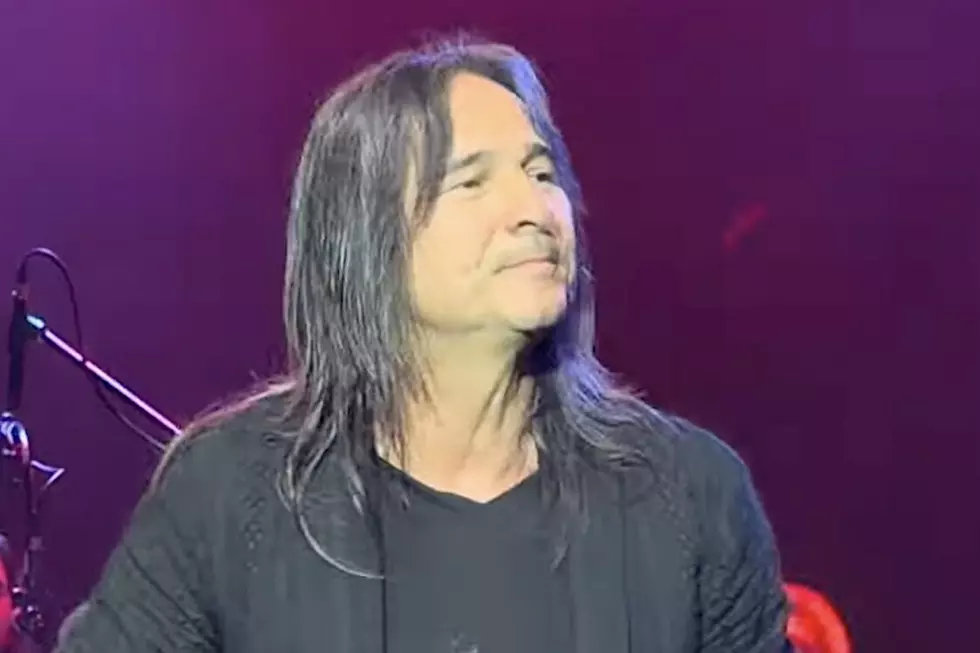
The Surprising Story of Journey’s Special Guest Singer Hugo Valenti
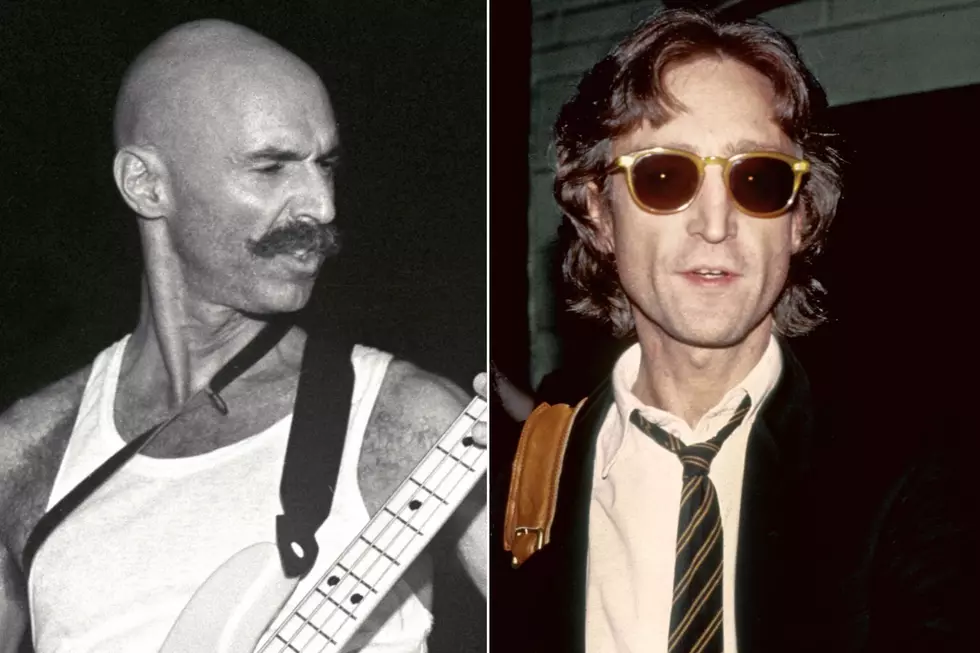
Tony Levin Recalls ‘Tension in the Air’ Making ‘Double Fantasy’
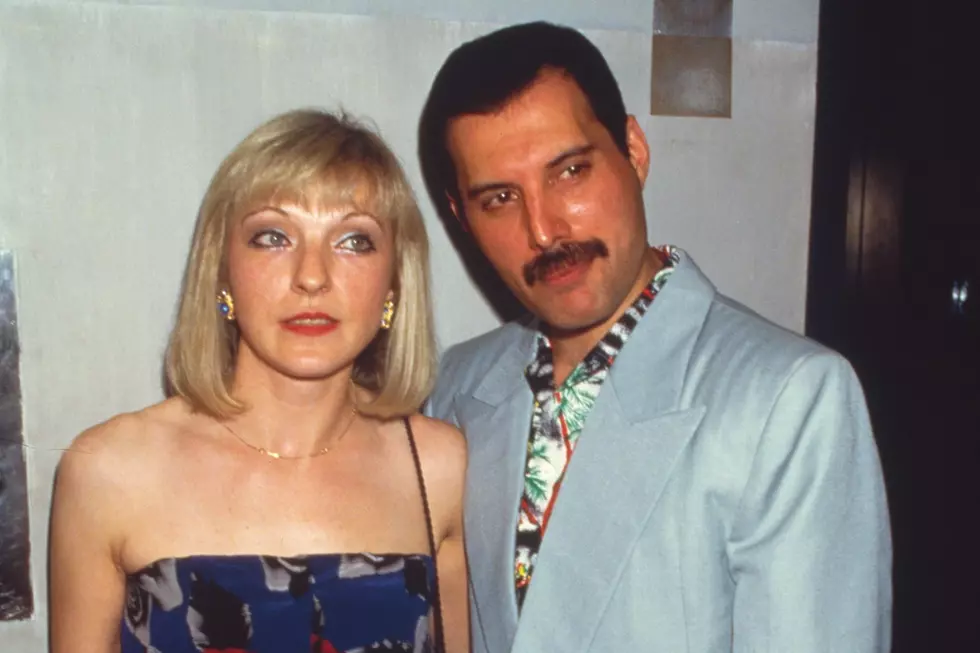
The Moment Mary Austin Knew Queen’s Freddie Mercury Was Gay

Controversy Erupts Over Undisclosed Overdubs on New Prince Album

John Mayer Won’t Rule Out a Dead and Company Return
Special Features

Top 25 Psychedelic Rock Albums
Recommended
After 60, Leg Strength Comes From One Simple Daily Move
ApexLabs
Powered by RevContent
Get our Newsletter
Information
- Advertise with Us
- Terms
- Contest Rules
- Privacy Policy
- Accessibility Statement
- Exercise My Data Rights
- Do Not Sell or Share My Personal Information
- Contact
Follow Us
2026 Ultimate Classic Rock, Townsquare Media, Inc. All rights reserved.
UCR cart
×
Your cart is empty.
Subscribe to Ultimate Classic Rock for the latest news and information that matters to you.
Unsubscribe anytime from your browser settings.ContinueMaybe Later


| https://www.youtube.com/subscribe_embed?action_card=1&channelid=UC0je8sTzTsz3hmSO-HbCt-w&usegapi=1&usegapi=1&jsh=m%3B%2F_%2Fscs%2Fabc-static%2F_%2Fjs%2Fk%3Dgapi.lb.en.zhTT8Br0Ho8.O%2Fd%3D1%2Frs%3DAHpOoo-7LeULGjNQZRvhdu3G71akb6JY6A%2Fm%3D__features__#id=I0_1788377916658&_gfid=I0_1788377916658&parent=https%3A%2F%2Fultimateclassicrock.com&pfname=&rpctoken=32573846 | | |
| | |
Read More: 40 Biggest One-Hit Wonders | https://ultimateclassicrock.com/one-hit-wonders/?utm_source=tsmclip&utm_medium=referralSkip to main contentSkip to site footer
Ultimate Classic Rock RadioUltimate Classic Rock Radio
Search The Site
40 Biggest One-Hit Wonders
Corey IrwinUpdated: September 25, 2025UCR
| Play The Buggleson Amazon Music Unlimited (ad) |
Just because an artist gets labeled a one-hit wonder, that doesn’t mean their impact on music is so easily forgotten. Many timeless and classic songs have been written and recorded by artists who enjoyed only one mainstream hit.
In the below list of 40 Biggest One-Hit Wonders, we consider a song’s commercial success as well as how it’s endured. The ‘80s are well-represented. The decade seemed to breed a large amount of one-hit wonders, many of whom rode the emerging new wave genre. Nine of our Top 10 one-hit wonders come from that decade, but the ‘60s, ‘70s and ‘90s still landed songs elsewhere on the list.
40. Cutting Crew, “I Just Died in Your Arms Tonight”
This chart-topping 1986 hit wasn’t inspired by a near-death experience but a sexual one. Cutting Crew singer Nick Van Eede came up with the song’s chorus after a one-night tryst with a former girlfriend. “We got back together for one night after a year apart, and I guess there were some fireworks but all the time tinged with a feeling of, ‘Should I really be doing this?”” the singer later recalled. The power ballad struck a chord with music fans and reached No. 1 on the Billboard Hot 100. As a debut single, Cutting Crew couldn’t have asked for a bigger introduction to the world, but with success came pressure. Cracks began to surface when none of their follow-up singles met commercial expectations. A battle with management kept the band’s sophomore album from coming out until 1989. It bombed, and by 1993 the group had disbanded.
Cutting Crew – (I Just) Died In Your Arms (Official Music Video)
Subscribe to Ultimate Classic Rock on https://www.youtube.com/subscribe_embed?usegapi=1&channel=UltClassicRock&count=hidden&layout=default&theme=default&origin=https%3A%2F%2Fultimateclassicrock.com&gsrc=3p&jsh=m%3B%2F_%2Fscs%2Fabc-static%2F_%2Fjs%2Fk%3Dgapi.lb.en.zhTT8Br0Ho8.O%2Fd%3D1%2Frs%3DAHpOoo-7LeULGjNQZRvhdu3G71akb6JY6A%2Fm%3D__features__#_methods=onPlusOne%2C_ready%2C_close%2C_open%2C_resizeMe%2C_renderstart%2Concircled%2Cdrefresh%2Cerefresh&id=I5_1788377926185&_gfid=I5_1788377926185&parent=https%3A%2F%2Fultimateclassicrock.com&pfname=&rpctoken=28136862
39. Toni Basil, “Mickey”
The song as infectious as a pep rally – so much so that its music video was cheerleader-themed – “Mickey” burrowed its way into listeners’ ears in January 1982. The track had originally been released by the British band Racey, but that version used the name “Kitty” instead of “Mickey” and didn’t include the song’s catchy “You’re so fine, you blow my mind” chant. Singer Toni Basil, who started her career as a choreographer after being a, yes, cheerleader in her youth, brought “Mickey” to life. The song hit No. 1 in the U.S. and was certified platinum, but Basil never came close to that success with any of her other songs.
TONI BASIL – Mickey
Subscribe to Ultimate Classic Rock on https://www.youtube.com/subscribe_embed?usegapi=1&channel=UltClassicRock&count=hidden&layout=default&theme=default&origin=https%3A%2F%2Fultimateclassicrock.com&gsrc=3p&jsh=m%3B%2F_%2Fscs%2Fabc-static%2F_%2Fjs%2Fk%3Dgapi.lb.en.zhTT8Br0Ho8.O%2Fd%3D1%2Frs%3DAHpOoo-7LeULGjNQZRvhdu3G71akb6JY6A%2Fm%3D__features__#_methods=onPlusOne%2C_ready%2C_close%2C_open%2C_resizeMe%2C_renderstart%2Concircled%2Cdrefresh%2Cerefresh&id=I0_1788377916001&_gfid=I0_1788377916001&parent=https%3A%2F%2Fultimateclassicrock.com&pfname=&rpctoken=21367985
38. The Knack, “My Sharona”
Should the Knack be considered a two-hit wonder? An argument can be made. After all, their single “Good Girls Don’t” reached No. 11 on the Billboard chart, meaning they qualify for this list by the slimmest of margins. Still, ask the average music fan to sing a line from “Good Girls Don’t” and they’ll likely stare back with a blank face. Ask them for a part from “My Sharona” and you’ll likely get a rousing, “My, my, my, I, yi, woo!” The 1979 single was an instant classic, Capitol Records’ fastest single to be certified gold since the Beatles’ “I Want to Hold Your Hand.” The Knack’s frontman, Doug Fieger, wrote “My Sharona” after falling for a woman named Sharona, who appeared on the single’s cover. While their relationship didn’t last, the two reportedly remained close friends up until Fieger died in 2010.
The Knack – My Sharona
Subscribe to Ultimate Classic Rock on https://www.youtube.com/subscribe_embed?usegapi=1&channel=UltClassicRock&count=hidden&layout=default&theme=default&origin=https%3A%2F%2Fultimateclassicrock.com&gsrc=3p&jsh=m%3B%2F_%2Fscs%2Fabc-static%2F_%2Fjs%2Fk%3Dgapi.lb.en.zhTT8Br0Ho8.O%2Fd%3D1%2Frs%3DAHpOoo-7LeULGjNQZRvhdu3G71akb6JY6A%2Fm%3D__features__#_methods=onPlusOne%2C_ready%2C_close%2C_open%2C_resizeMe%2C_renderstart%2Concircled%2Cdrefresh%2Cerefresh&id=I1_1788377918263&_gfid=I1_1788377918263&parent=https%3A%2F%2Fultimateclassicrock.com&pfname=&rpctoken=34920742
37. After the Fire, “Der Kommissar”
Austrian singer Falco deserves an honorable mention. His 1985 hit “Rock Me Amadeus” didn’t get enough votes from our writers to crack our Top 40, but he has a part in “Der Kommissar”: He released the original version of the hit song. His single, released in 1981, was sung in German and received just a little attention in the U.S. A year later the U.K. band After the Fire covered the song in English, scoring the only hit of their career. Success arrived too late for the band. After the Fire, which had been together since 1982, was crumbling as “Der Kommissar” was climbing the charts. The group had already broken up by the time the song peaked at No. 5 on the Billboard Hot 100.
After The Fire – Der Kommissar
Subscribe to Ultimate Classic Rock on https://www.youtube.com/subscribe_embed?usegapi=1&channel=UltClassicRock&count=hidden&layout=default&theme=default&origin=https%3A%2F%2Fultimateclassicrock.com&gsrc=3p&jsh=m%3B%2F_%2Fscs%2Fabc-static%2F_%2Fjs%2Fk%3Dgapi.lb.en.zhTT8Br0Ho8.O%2Fd%3D1%2Frs%3DAHpOoo-7LeULGjNQZRvhdu3G71akb6JY6A%2Fm%3D__features__#_methods=onPlusOne%2C_ready%2C_close%2C_open%2C_resizeMe%2C_renderstart%2Concircled%2Cdrefresh%2Cerefresh&id=I2_1788377918279&_gfid=I2_1788377918279&parent=https%3A%2F%2Fultimateclassicrock.com&pfname=&rpctoken=40525431
36. Gary Numan, “Cars”
Gary Numan had enjoyed success with the new wave group Tubeway Army, which scored a U.K. hit with their 1979 single “Are ‘Friends’ Electric?” That same year, Numan broke out as a solo act, scoring a worldwide hit with his debut single, “Cars.” The song, inspired by a bout of road rage, found Numan embracing a poppier approach to songwriting. “This was the first time I had written a song with the intention of, ‘Maybe it could be a hit single,’” the singer admitted. “Cars” hit No. 9 in the U.S. and No. 1 in the U.K. While Numan has enjoyed a respected career ever since, he’s never again had a hit single.
35. Mungo Jerry, “In the Summertime”
When you think “sound of summer” you don’t usually think “jug band.” But that’s exactly the style of music Mungo Jerry used in their 1970 hit. Reportedly written by singer Ray Dorset in just 10 minutes, the breezy track perfectly captures that time of year when “the weather is high.” It reached No. 3 on the Billboard Hot 100 chart, the only Mungo Jerry song to earn mainstream attention in the States.
34. Kajagoogoo, “Too Shy”
English new wave group Kajagoogoo had been together for roughly five years – under the name Art Nouveau at first – before signing their first record deal in 1982. They struck gold with their debut single, “Too Shy,” which was produced by Duran Duran’s Nick Rhodes. The band’s label had pushed against the track, claiming it was too dark. “They wanted to release what they considered to be a brighter, poppier track,” bassist Nick Beggs later recalled. Kajagoogoo looked poised for a bright career when, in 1983, “Too Shy” went Top 5 in 12 countries, including the U.S. While follow-up singles “Ooh to Be Aah” and “Hang on Now” did well in the U.K., neither registered in the U.S. The band broke up at the end of 1985, but “Too Shy” has remained a time capsule of the era, included in everything from the soundtrack to The Wedding Singer to the video game Grand Theft Auto: Vice City Stories.
33. Peter Schilling, “Major Tom”
Here’s a rare occurrence where an artist created a sequel to someone else’s song. Singer Peter Schilling based “Major Tom” on a character first created by David Bowie for the 1969 single “Space Oddity.” Schilling’s song kept up the interplanetary theme, with its chorus: “Earth below us / Drifting, falling / Floating weightless / Calling, calling home.” Released in 1983, “Major Tom” reached No. 14 on the Billboard Hot 100, the only song of Schilling’s career to chart in the U.S.
32. The Crazy World of Arthur Brown, “Fire”
With a demonic spoken word opening in which frontman Arthur Brown declared himself the “god of Hellfire,” “Fire” hardly seemed like the type of song that would find mainstream success. But the psychedelic rock track managed to ignite something in fans. The 1968 single hit No. 1 in the U.K. and No. 2 in the U.S., making it the Crazy World of Arthur Brown’s most successful single. The group broke up in 1970 but returned in 2000, with material arriving sporadically ever since.
31. Georgia Satellites, “Keep Your Hands to Yourself”
They may be a one-hit wonder, but Georgia Satellites sure made an impact with their only mainstream single. When “Keep Your Hands to Yourself” reached No. 2 on the Billboard Hot 100 in 1987 – held out of the top spot by Bon Jovi’s “Livin’ on a Prayer” – the heavy-hitting song proved that southern rock could still thrive, while also inspiring heavier guitars in country songs. “Somebody made the comment that it was the song that saved rock ‘n’ roll and ruined country music at the same time,” singer Dan Baird once admitted to Rolling Stone. “It meant it brought rock ‘n’ roll back to its roots for a few minutes, but it turned the corner on country being afraid of dumb loud guitars.”
30. Shocking Blue, “Venus”
Dutch rock group Shocking Blue had a few hits in their homeland in the late ‘60s, but it was 1969’s “Venus” that brought international attention. The song, with its strummy guitar and groovy organ, climbed to No. 1 on the Billboard Hot 100. Even though the band never came close to such heights again, “Venus” sold more than 5 million copies around the world and continues to be popular, appearing in everything from The Queen’s Gambit to a long-running advertising campaign for Gillette, whose women’s line of razors is called Venus.
29. The Vapors, “Turning Japanese”
During the new wave boom of the late ’70s and early ‘80s, it seemed like another new wave act was arriving from the U.K. each week. Among them was the Vapors, a quartet from Surrey that released their debut album, New Clear Days, in 1980. The lead single, “Turning Japanese,” was built on a Japanese-sounding motif, but the catchy song’s narrative was often misinterpreted. “It was intended purely as a love song,” singer Dave Fenton later explained. “The protagonist is sitting in his bedroom, which has become like a prison cell, pining over a photograph of his ex-girlfriend.” “Turning Japanese” became the Vapors’ only hit, and by 1982 the band was over. “When people ask if the song’s become an albatross, I say no,” Fenton admitted. “I’m pleased it happened to us. I’d rather be a one-hit wonder than a no-hit wonder.”
28. Wild Cherry, “Play That Funky Music”
Wild Cherry began life as a hard rock cover band in the Pittsburgh area. As the ‘70s rolled on, the group found it more difficult to book gigs, as disco and dance tunes had overtaken rock in popularity. “One night, I got the band in the dressing room and I told them, ‘We’ve got to play more of this disco stuff,’” singer Rob Parissi recalled. “They went nuts: ‘We don’t want to be a disco band.’” At one of Wild Cherry’s shows, a Black audience member asked, “Are you white boys going to play some funky music?” An idea was spawned. “Play That Funky Music” became a No. 1 single in 1976, reaching multiplatinum sales and earning Wild Cherry a pair of Grammy nominations. After failing to follow up “Play That Funky Music” with another hit, they broke up in 1979.
27. The Ides of March, “Vehicle”
It’s hard to deny the gravitational pull of “Vehicle” when those horns kick in. The 1970 single was a breakout hit for the Ides of March, peaking at No. 2 on the Billboard Hot 100. After years of touring around their native Illinois, “Vehicle” elevated the Ides of March to national touring act. The band shared the stage with such luminaries as Jimi Hendrix, Janis Joplin and Led Zeppelin, but they were never able to score another hit. Even after ditching the brass section and trying to move in a new stylistic direction, nothing seemed to click. The Ides of March broke up in 1973, but the band’s singer and co-founder, Jim Peterik, had a more successful second act when he founded Survivor in 1978 and scored several big hits in the ‘80s.
26. The Proclaimers, “I’m Gonna Be (500 Miles)”
With their pasty, clean-cut and spectacled look, twin brothers Charlie and Craig Reid hardly looked the part of chart-topping rock stars. Still, the Irish duo had a songwriting gift, including a knack for pop hooks. In 1988 their group the Proclaimers released the album Sunshine on Leith, featuring “I’m Gonna Be (500 Miles).” The song hit first in the U.K., where it reached No. 11. Five years later it caught on in the U.S. thanks to its inclusion in the romantic comedy Benny & Joon. Rereleased as a single, “I’m Gonna Be (500 Miles)” peaked at No. 3 on the Billboard Hot 100.
25. The Contours, “Do You Love Me”
“Do You Love Me” was written by Motown Records founder Berry Gordy Jr., who had intended to give it to the Temptations to record. But the Temptations weren’t in the studio when Gordy went there, so he offered it to another Motown vocal group, the Contours. The group cemented its place in music history with “Do You Love Me.” The song remains a favorite at weddings, birthdays and bar mitzvahs.
24. Iron Butterfly, “In-A-Gadda-Da-Vidda”
It’s messy, there are mistakes in the recording and it’s words are difficult to understand – it was supposed to be “In the Garden of Eden.” But there’s something gloriously indulgent about “In-A-Gadda-Da-Vida.” Running more than 17 minutes, the song is a long and winding psychedelic trip, complete with drums, guitar and soaring organ parts. Even though Iron Butterfly would never score another hit following this 1968 single, “In-A-Gadda-Da-Vida” remains a cultural tentpole, appearing everywhere from The Simpsons to a popular sample in rap songs.
23. Buckner & Garcia, “Pac-Man Fever”
History is filled with novelty hits but few enjoyed more of a cultural impact than Buckner & Garcia’s “Pac-Man Fever.” The 1981 single was recorded in response to the popular video game, which became a phenomenon across the globe in 1980. Jerry Buckner and Gary Garcia were jingle writers from Akron and witnessed the excitement surrounding Pac-Man firsthand. “Pac-Man” fever reached No. 9 on the Billboard Hot 100 and inspired the duo to record an entire album of video game-inspired songs, including “Do the Donkey Kong,” “Ode to Centipede” and “Froggy’s Lament.” Lightning didn’t strike twice, and “Pac-Man Fever” remained their only hit.
22. Men Without Hats, “The Safety Dance”
“The Safety Dance” was written by Men Without Hats singer Ivan Doroschuk after he’d been thrown out of a club for “pogoing,” the bouncing new wave dance not always accepted by concerned staff. “I was kind of mad that they wouldn’t let me dance if I wanted to, so I took matters in my own hands and wrote an anthem for it,” he later recalled. Doroschuk never expected “The Safety Dance” to become a hit, but something about the song clicked with audiences. “I think people can relate to the empowering kind of message of ‘The Safety Dance’: ‘You can dance if you want to,’” Doroschuk explained in a later interview. “And when the song first came out, it was the beginning of rap, and it was one of the only songs that had a spoken thing to it.”
21. The Church, “Under the Milky Way”
“Under the Milky Way” proved to be both a blessing and a curse for the Australian band the Church. The 1988 single became the group’s biggest international hit, introducing them to a larger audience and taking them on tours around the world. But there were plenty of drawbacks. “The guys in the band all hated each other, and they all hated me,” singer Steve Kilbey explained in 2018. “Instead of being grateful that I’d written this song which had dragged them into the spotlight they were sort of envious and miserable about it as well.” Even though the Church has enjoyed a career spanning more than four decades, “Under the Milky Way” remains its only U.S. hit.
20. Carl Douglas, “Kung Fu Fighting”
Carl Douglas was born in Jamaica and raised in England. Neither nation, it should be noted, is known for its contributions to martial arts. Still, that didn’t stop Douglas from tapping into the popularity of Kung Fu movies in the ‘70s with his song “Kung Fu Fighting.” The track was recorded in just 10 minutes and was meant to be the B-side of a single. “I went over the top on the ‘huhs’ and the ‘hahs’ and the chopping sounds,” producer Biddu recalled. “It was a B-side; who was going to listen?” As it turned out, lots of people. “Kung Fu Fighting” topped charts across the globe in 1974, selling more than 11 million copies worldwide. Douglas tried to capitalize on the track’s popularity by recording a similar song, “Dance the Kung Fu,” but it didn’t receive the same excitement. He never scored another hit, but “Kung Fu Fighting” has remained omnipresent, used in TV shows and movies such as Dancing With the Stars, Scrubs, Beverly Hills Ninja, Rush Hour and Kung Fu Panda.
19. Dead or Alive, “You Spin Me Round (Like a Record)”
Liverpool group Dead or Alive had already made some noise in the U.K.’s dance scene when they released their 1984 single “You Spin Me Round (Like a Record).” The track catapulted them onto the world’s stage, going Top 10 in 15 countries, including a No. 11 peak in the States. Although it would be their only hit, the catchy song would later be covered by a variety of artists, including Jessica Simpson and nu metal band Dope. Rapper Flo Rida also interpolated the song’s chorus for his 2009 hit single with Kesha, “Right Round.”
18. The Penguins, “Earth Angel”
The only thing better than having a hit song is having one on your first try. “Earth Angel” – penned by Curtis Williams, Jesse Belvin and Gaynel Hodge – was released by the Penguins in 1954 as their debut single and became an enormous hit. “Earth Angel” was a demo; vocal group the Penguins had recorded the song in the garage of a cousin to the song’s producer, Dootsie Williams. No overdubs were needed. “Earth Angel” was the Penguin’s only hit, but it sold millions of copies and has been called one of the cornerstone songs of doo-wop.
17. Lipps Inc, “Funkytown”
Anyone complaining about modern music stars being “fabricated” or “industry plants” should take a look back in history. Record producer Steve Greenberg formed Lipps Inc. in 1979 as a vehicle for former beauty queen Cynthia Johnson, who was looking to transition into music. Greenberg loaded a group with session musicians and then wrote a song to break them. “Funkytown” became a massive worldwide hit. Lipps Inc. was never able to replicate the success, and Johnson eventually enjoyed a career second act in gospel music.
16. Steam, “Na Na Hey Hey Kiss Him Goodbye”
Studio musicians Gary DeCarlo, Dale Frashuer and Paul Leka had worked together on various projects for a few years. In 1969, DeCarlo was recording songs with Leka producing when they decided to revisit an old idea. “I started writing while I was sitting at the piano going ‘Na, na, na, na, na, na, na, na.’ … Everything was ‘na na’ when you didn’t have a lyric,” Leka recalled. The result was “Na Na Hey Hey Kiss Him Goodbye,” which they planned to use as a B-side to DeCarlo’s next single, but the record label loved it so much they wanted to make it the favored track. Due to contractual obligations, the single was released under the band name Steam, even though there wasn’t a real group at the time. “Na Na Hey Hey Kiss Him Goodbye” hit No. 1 on the Billboard Hot 100 and has endured as a timeless kiss-off.
15. Chumbawamba, “Tubthumping”
There isn’t anything inherently interesting about Chumbawamba’s “Tubthumping.” The song repeats the same lyrical phrase – “I get knocked down, but I get up again / You’re never gonna keep me down” – a whopping 29 times. The only other lyrics generally cover a list of beverages – whiskey drink, vodka drink, lager drink, cider drink – and the act of “pissing the night away.” But the song was a massive international hit in 1997. It made the Top 10 in 17 different countries, including a peak of No. 6 in the U.S. Critics raved about the song, while its video was plastered all over MTV. But Chumbawamba was a political rock collective whose music sounded little like their one hit. Mainstream success wasn’t their goal, so “Tubthumping” was their only song to chart in the States.
14. Ram Jam, “Black Betty”
That riff, that thumping beat, that “Bam-ba-lam” – there’s no escaping the infectious excitement of Ram Jam’s “Black Betty.” The song began life as a 20th-century African-American work song. Exactly what “Black Betty” is a nickname for has been debated, though the most common theory is a bottle of whiskey. Blues and folk legend Lead Belly recorded a popular a cappella version in 1939. More than 35 years later, New York rock band Ram Jam got their hands on it, turning “Black Betty” into a hard rocking hit. Ram Jam wasn’t able to keep the momentum rolling, as band turmoil quickly brought the group to an end. They broke up in 1978, roughly a year after “Black Betty” was released.
13. Blind Melon, “No Rain”
Blind Melon was on top of the musical mountain in 1993 when their single “No Rain” became a massive hit. The song’s popularity, further enhanced by its beloved “Bee Girl” music video, helped push Blind Melon’s self-titled debut album to multiplatinum sales. With performances opening for the Rolling Stones and a set at Woodstock ‘94, Blind Melon were enjoying the fruits of their success. But their sophomore album, Soup, sold poorly, and just months after its release, frontman Shannon Hoon died of a cocaine overdose at the age of 28. His death brought Blind Melon to a close.
12. Big Country, “In a Big Country”
The ‘80s were all about being big: big hair, big cars and big songs. The Scottish band Big Country scored a massive hit in 1983 with “In a Big Country,” a soaring song about harnessing hope and optimism. With guitar parts engineered to sound like bagpipes, the track sounded unlike anything else on the radio. It reached No. 3 on Billboard’s Mainstream Rock chart and No. 17 on the Hot 100, and its video earned heavy rotation on MTV. It marked a career highwater mark for Big Country, who never again came close to such commercial success.
11. Autograph, “Turn Up the Radio”
Autograph got a head start when they were selected by drummer Keni Richards’ friend David Lee Roth to open 48 shows on Van Halen‘s 1984 tour before releasing an album or even signing a record contract. The attention scored them a deal, and “Turn Up the Radio,” the first single from their debut album Sign In Please, cracked the Top 30. The song’s profile was further boosted by appearances in Miami Vice and several movies. But even after releasing two more albums in the ’80s, the band never broke through to the next level.
10. Norman Greenbaum, “Spirit in the Sky”
After bouncing around bands, Norman Greenbaum became a solo artist in the late ‘60s. He penned “Spirit in the Sky” as a folk song, but producer Erik Jacobsen helped build it into a psychedelic rocker, a song instantly recognizable from its first notes. “I’m just some Jewish musician who really dug gospel music,” Greenbaum explained to Rolling Stone. “I decided there was a larger Jesus gospel market out there than a Jehovah one.” In 1970, “Spirit in the Sky” hit No. 1 in the U.K. and No. 3 in the U.S. Sixteen years later, British glam rock band Doctor and the Medics topped the U.K. chart with a cover. It happened again in 2003 when Gareth Gates reached No. 1 in the U.K. with his rendition. As such, the track has the distinct honor of having been No. 1 in the U.K. three different times by three different artists.
9. Eddy Grant, “Electric Avenue”
After two decades of success in the U.K., both with his band the Equals and as a solo act, Eddy Grant finally invaded the U.S. in 1983, thanks to “Electric Avenue.” The track’s subject matter, race riots in the Brixton area of London, was likely lost on American listeners, but its reggae rhythm and catchy chorus connected all the same. The single reached No. 2 on the Billboard Hot 100 and was certified platinum. Even though Grant has remained a popular presence in music, another hit has eluded him.
8. Tommy Tutone, “867-5309/Jenny”
Not only was there never a real Jenny, there was never even a Tommy Tutone. The band scored their only hit in 1981 with “867-5309/Jenny,” which peaked at No. 4 on the Billboard Hot 100. The song is about a girl’s phone number written on the bathroom wall, a story the group initially claimed was true. But in 2004 co-writer Alex Call set the record straight. “Despite all the mythology to the contrary, I actually just came up with the ‘Jenny’ and the telephone number and the music and all that just sitting in my backyard. There was no Jenny,” he explained. “Tommy Tutone’s been using the story for years that there was a Jenny and she ran a recording studio and so forth. It makes a better story, but it’s not true.”
7. Modern English, “I Melt With You”
When Modern English wrote “I Melt With You” in the early ’80s, England was in a pretty bleak place economically: A deep recession was taking place as the government attempted to deal with inflation. Everyone felt the effects. “There was no money. There’d be no power — you’d be at home with candles,” Modern English singer Robbie Grey later explained. It was the ideal time for a lucrative hit song, which Modern English landed with “I Melt With You” in 1982. Ironically, the song was bigger in the U.S., reaching No. 78 on the Hot 100. Modern English never had another hit.
6. Dexys Midnight Runners, “Come On Eileen”
In 1982, English band Dexys Midnight Runners delivered one of the ‘80s most memorable songs. With a distinctive Celtic fiddle, “Come On Eileen” didn’t sound like any other song at the time. Part of its charm was its simplicity. Anyone at any age could sing along, especially the track’s climatic “Too-ra-loo-ra Too-ra-loo-rye-ay” section. “Come On Eileen” reached No. 1 on the Billboard Hot 100 in 1983, the only U.S. hit for Dexys Midnight Runners.
5. Nena, “99 Luftballons”
It takes guts, talent and a bit of luck to turn nuclear war into a timeless song. Gabriele Susanne Kerner – better known by her stage name Nena – had all of that in 1983. “99 Luftballons” was originally released in Nena’s native German. The language barrier didn’t stop it from climbing the charts all over the world, including a peak of No. 2 in the U.S., where an English version called “99 Red Balloons” was released. Nena never scored another hit and had broken up by the end of the ‘80s, but Kerner continued having success in Germany for years as a solo act.
4. Soft Cell, “Tainted Love”
British soul singer Gloria Jones originally released “Tainted Love” in 1965. The song wasn’t a hit and was largely forgotten until Soft Cell got their hands on it. By adding a male perspective, along with a sinister vocal delivery, the synth-pop duo turned their icy track into a worldwide hit. Their version of “Tainted Love” became a chart-topper in 1981, reaching No. 1 in 17 countries and peaking at No. 8 in the U.S. Its 43 weeks on the Billboard Hot 100 set a then-record for the longest consecutive stay on the chart. It was the band’s only hit in the U.S., but they remained popular in the U.K.
3. Frankie Goes to Hollywood, “Relax”
Decades after its 1983 release, kids in their teens and 20s are still buying T-shirts that read “Frankie Say Relax.” “Relax” was quite controversial when it was released because of its overtly sexual subject matter (“Relax, don’t do it / When you want to come”). The track was banned by the BBC, which unintentionally gave the Liverpool-based Frankie Goes to Hollywood more attention than they ever imagined. “Relax” hit No. 1 in the U.K. and No. 10 in the U.S. While Frankie Goes to Hollywood had a few more hits in Europe, they never again clicked with American listeners.
2. A-ha, “Take On Me”
Oddly enough, when a-ha released “Take On Me” as a single in the U.K. in 1984, it flopped, reaching only No. 137. (For what it’s worth, it did make it to No. 3 in the band’s home country of Norway.) They tried releasing the song two more times in 1985, and finally, it took off, making it to No. 2 and No. 1 on the U.K. and U.S. charts, respectively. This was helped by an innovative, animated pencil-sketch video that was played often on MTV and won multiple awards. Pretty impressive for a song that band members Pal Waaktaar and Magne Furuholmen first started fleshing out as teenagers.
1. The Buggles, “Video Killed the Radio Star”
English new wave group the Buggles was active for only five years, from 1977 to 1982. Made up of singer and bassist Trevor Horn and keyboardist Geoff Downes, the duo experimented with rapidly changing studio technology. They released their synth-heavy debut album The Age of Plastic in 1980, which included the single “Video Killed the Radio Star.” While the song became a hit all over the world, the U.S. was slow to catch on. The track peaked at No. 40 and then started to fade. Then MTV premiered in August 1981, and “Video Killed the Radio Star” was the first video to air on the fledgling network. It became a symbolic change of the guards for the way audiences consumed music. Both members of the Buggles have gone on to other successful endeavors (as producers and members of Yes and Asia), but “Video Killed the Radio Star” remains a pivotal snapshot in history.
20 Greatest Comeback Albums
Becoming a successful artist is difficult. Remaining on top forever is downright impossible.
Gallery Credit: UCR Staff
Columbia
20. (Tie) Bruce Springsteen, ‘The Rising’ (2002)
The Rising marked several Springsteen comebacks. It was his first album in seven years (his longest break between LPs), his first full band album in 10 years, his first album with the E Street Band since 1984’s massive star-making Born in the U.S.A. and his first album to top the chart since 1997’s Tunnel of Love. More than all of that, though, The Rising signaled a return to form for Springsteen, who had spent his post-U.S.A. years steering away from the big, E Street Band-assisted sound that made him one of the biggest artists on the planet. Inspired in part by 9/11, Springsteen had good reason to wear his heart on his sleeve again. After years of running away from his legacy, Springsteen – in songs like the rousing title track – returned home on the triumphant Rising. (Michael Gallucci)
Arista
20. (Tie) Carly Simon, ‘Coming Around Again’ (1987)
As the ’70s gave way to the ’80s, Carly Simon’s career downshifted to a much lower gear and she began to experiment with different genres. Come Upstairs saw Simon taking on an undeniably upbeat rock ‘n’ roll feel in 1980, while 1981’s followup Torch was devoted to jazzy standards. Simon hadn’t necessarily lost her touch — her releases through the first half of the ’80s were mostly well received by critics – but none of it really caught the attention of the greater public. That is, until Coming Around Again. Suddenly, her songwriting struck a chord with listeners once more. As the title suggests, this 1987 LP again showcases Simon’s quintessential style of confessional songwriting with a universal bent, complete with bright, memorable melodies and Simon’s signature alto vocal. The difference was its more modern adult-contemporary approach. (Allison Rapp)
ATCO
19. Yes, ‘90125’ (1983)
A lot of the brilliance of Yes has come as a result of nearly constant conflict and inner turmoil. A good example remains 90125, which was born out of the dissolution of the Jon Anderson-less lineup that produced a single album, 1980’s Drama. Bassist Chris Squire picked up the pieces and established a new band called Cinema that incorporated South African guitarist Trevor Rabin, alongside alumni Yes members. But a fresh reunion loomed when label execs questioned the commercial viability of Squire and Rabin’s lead vocals. An olive branch was extended to former vocalist Jon Anderson, who agreed to sing on the album. He helped Yes score a surprise No. 1 hit with “Owner of a Lonely Heart”; they also landed a Grammy for the instrumental “Cinema.” Nearly two years of touring followed, cementing the return to the top for Yes. (Matt Wardlaw)
Warner Bros.
18. Metallica, ‘Death Magnetic’ (2008)
Metallica’s St. Anger might have sold in the millions and won a Grammy for its title track, but its nu-metal riffs, absence of solos and ghastly snare drum sound still horrified longtime fans. The follow-up, 2008’s Death Magnetic, heralded a long-awaited return to the breakneck, progressive thrash of the band’s glory days. “That Was Just Your Life” and “My Apocalypse” crackle with spidery riffs, furious drums and bloodthirsty vocals, while “Cyanide” is full of supersized alt-metal hooks. “The Day That Never Comes” is the album’s centerpiece, with somber hooks and evocative guitar harmonies that recall “Fade to Black.” It’s almost enough to make you overlook Rick Rubin’s bone-dry, everything-in-the-red production. (Bryan Rolli)
Parlophone
17. Duran Duran, ‘Duran Duran (The Wedding Album)’ (1993)
Liberty became the first Duran Duran album that failed to spawn a Top 10 hit. By the time this self-titled LP followed, it had been more than five years since Duran Duran reached that peak – an eternity in pop music. But the out-of-the-blue chart-topping success of the “Ordinary World” single proved that their success wouldn’t be confined to the ’80s. Duran Duran as a whole showcased a more mature side of their sound, and helped smooth a transition to the beloved elder-statesman status that the band went on to enjoy. (Matthew Wilkening)
Columbia
16. Bob Dylan, ‘Oh Mercy’ (1989)
Dylan recorded this comeback with producer Daniel Lanois near one of New Orleans’ stately above-ground graveyards, Lafayette Cemetery No. 1. “The past doesn’t pass away so quickly here,” Dylan mused, and that appeared to have become a personal burden, too: Oh Mercy gave in to what was happening to his suddenly oaken voice, gave in to the atmospheric process that Lanois favored, and gave in to worry too, seeming to rebuke everything he’d preached on hope-filled albums like Saved – not to mention his goofball one-offs as part of the Traveling Wilburys. Rather than deflate his aging legend, however, all of that somehow ended up completely reanimating Bob Dylan. A template was now set for his long final act. (Nick DeRiso)
EMI
15. Iron Maiden, ‘Brave New World’ (2000)
Following two dismally received albums with lead singer Blaze Bayley, the reconstituted Iron Maiden roared back to life with Brave New World, welcoming beloved frontman Bruce Dickinson and guitarist Adrian Smith back into the fold. The album-opening “Wicker Man” is an all-time classic, rocking with the same verve and catchiness of mid-’80s favorites like “Aces High” and “2 Minutes to Midnight.” Progressive song structures and towering singalongs abound on the punchy title track, the heartstring-tugging “Blood Brothers” and the sprawling, nine-minute “Dream of Mirrors.” More than a rosy nostalgia trip, Brave New World trounces the Dickinson-led No Prayer for the Dying and Fear of the Dark to rank among Iron Maiden’s best work. (Rolli)
Reprise
14. Green Day, ‘American Idiot’ (2004)
Green Day was suddenly at a crossroads at the turn of the millennium, as Warning became the first album since 1994’s Dookie to fail to reach platinum sales. Behind the scenes, Billie Joe Armstrong, Tre Cool and Mike Dirnt were dealing with their own turmoil, and even questioning whether they wanted to keep the band going. A shift in direction led them to American Idiot, a sprawling rock opera that was far more complex and political than any of their early pop-punk exploits. The trio essentially tossed away any preconceived notions about what a Green Day song had to sound like, even allowing a pair of them to stretch more than nine minutes. This bold risk was rewarded by their fans, as the multi-platinum American Idiot reached No. 1. More importantly, the album set Green Day up for a career second act which garnered further critical and commercial acclaim. (Corey Irwin)
Mercury
13. Kiss, ‘Lick It Up’ (1983)
Kiss spent the late ’70s and early ’80s alienating their fans so badly that even 1982’s return-to-form Creatures of the Night flopped. A major re-branding was in order, and that’s exactly what the band delivered with 1983’s Lick It Up. Revealing the faces behind their onstage makeup for the first time earned Kiss a big wave of publicity. While slightly slicker and less powerful than Creatures, Lick It Up was more than worthy of that attention. New guitarist Vinnie Vincent wouldn’t last long, but he proved to be an excellent songwriting partner for Gene Simmons and Paul Stanley while helping the band update their sound for a new era. The infectious title track earned Kiss a strong foothold on MTV, kicking off a rebirth that soon led the group back to headlining arenas and platinum sales. (Wilkening)
Reprise
12. Neil Young, ‘Freedom’ (1989)
There were a few reasons for the lull in Neil Young’s career through the ’80s. One was that Young was doing less writing and recording, instead devoting much of his time to caring for son Ben, who was born with cerebral palsy in 1978. Young also began to butt heads with Geffen, where label execs were upset with the lack of commercial viability of his music. Unafraid to experiment, Young spent much of the decade making albums that seemed to jump from genre to genre. (Geffen actually sued Young in 1983 for releasing music they felt was “unrepresentative” and “uncharacteristic” of the artist they’d signed.) In 1989, Young returned to his former label Reprise, and to a form of music that many fans found to be a relief. Freedom features the same folk-tinged rock ‘n’ roll that made Young famous in the first place, with lyrics that express both outrage and a determination to move forward. (Rapp)
ATCO
11. AC/DC, ‘Razor’s Edge’ (1990)
AC/DC struggled to maintain momentum after establishing a strong new chapter at the beginning of the ‘80s with the arrival of vocalist Brian Johnson and Back in Black. A trio of uneven albums had culminated with 1988’s Blow Up Your Video, before AC/DC teamed up with white-hot producer Bruce Fairbairn (Bon Jovi, Aerosmith) for 1990’s The Razor’s Edge. Guitarists Angus and Malcolm Young also took charge of the songwriting for the album. Anchored by future stadium-rocker “Thunderstruck” and the similarly anthemic “Moneytalks” and “Are You Ready,” AC/DC came armed with the right mix of humor (“Mistress for Christmas”) and tawdry hard rock. While they hardly changed the formula, AC/DC found a renewed focus that carried them forward for decades. (Wardlaw)
ISO Records
10. David Bowie, ‘The Next Day’ (2013)
David Bowie reached a commercial peak with 1983’s Let’s Dance, hitting No. 4 (his best showing after Station to Station‘s No. 3 pinnacle) and No. 1 (his second after 1975’s “Fame”) with the title track. Then he spent the next two decades releasing underperforming and underwhelming records. He broke a 10-year break in early 2013 with the surprise release of The Next Day, an art-rock collaboration with producer Tony Visconti that recalled some of their best and most challenging works from the ’70s. Bowie would have to wait until his next album – 2016’s Blackstar, released days before his death – for Bowie’s only No. 1 LP, but The Next Day (which debuted at No. 2) reignited the spark and set the stage for the final arc of his career. (Gallucci)
Island
9. U2, ‘All That You Can’t Leave Behind’ (2000)
U2 experienced the first significant lull of their career in the mid-to-late ‘90s – though “lull” is a relative term: They still reached platinum sales with 1993’s Zooropa and 1997’s Pop. Yet, they’d clearly begun to lose some creative spark while struggling to find a place in the modern musical landscape. Then All That You Can’t Leave Behind arrived, delivering some of the most stirring material of their career. “Beautiful Day” was an uplifting celebration of life, “Walk On” was a passionate tune inspired by Burmese activist Aung San Suu Kyi and “Elevation” proved that U2 still knew how to deliver stadium-rocking swagger. All That You Can’t Leave Behind went on to sell more than 12 million copies, while also scoring a total of seven Grammy Awards. (Irwin)
Vertigo
8. Black Sabbath, ‘Heaven and Hell’ (1980)
Frankly, the idea of anyone filling Ozzy Osbourne’s shoes was so ridiculous that Black Sabbath hadn’t really considered it. Instead, Tony Iommi had decided to form a new group with former Rainbow singer Ronnie James Dio. Then Geezer Butler and Bill Ward got involved, and it became clear that a new incarnation of Black Sabbath was taking shape. It had been seven years since the band’s last platinum album, but their name still carried weight – so expectations for the Dio-fronted lineup would be high. Heaven and Hell far exceeded those expectations, boasting a bevy of powerful material from the epic “Children of the Sea” to the frenetic “Neon Knights.” A vocal faction of fans inevitably claimed there could be no Black Sabbath without Osbourne, but the album clearly won over many others: Heaven and Hell peaked in the U.K. Top 10 and the U.S. Top 30. (Irwin)
Geffen
7. John Lennon / Yoko Ono, ‘Double Fantasy’ (1980)
Like most of the comeback albums on our list, Double Fantasy started out triumphantly – but this one became tragic. John Lennon’s first studio LP after a five-year hiatus to help raise his son Sean was a new collaboration with Yoko Ono. The former Beatles star was reinvigorated, sequencing the LP with alternating songs by Lennon and Ono like a conversation between two lovers. “Just Like Starting Over” bounced along with doo-wop flair and “Beautiful Boy (Darling Boy)” offered a delicate ode to fatherhood, while “I’m Losing You” showed Lennon’s gritty rock side. All of it would be overshadowed less than three weeks after the album’s release, however, when Lennon was killed outside of his New York home. Double Fantasy took on a kind of mythological place in rock history as the final record issued during Lennon’s lifetime. (Irwin)
Arista
6. Santana, ‘Supernatural’ (1999)
By the late ‘90s, Santana’s place in rock history seemed more or less set. The band, led by namesake guitarist Carlos Santana, had landed multiple radio hits, scored a handful of multi-platinum albums and had the distinction of being among Woodstock’s most memorable performers. Rock veterans are not expected to suddenly become chart-topping pop stars 30 years after making their debut, but that’s exactly what happened. Supernatural arrived in 1999 stacked with guest appearances ranging from classic artists (Eric Clapton), to modern hitmakers (Lauren Hill, Dave Matthews). Rather than being played for a gimmick, the eclectic collaborations showcased how Santana’s sound could defy traditional generational pigeonholing. “Smooth” (featuring Rob Thomas) and “Maria Maria” became the first Santana songs to reach the Top 20 in more than 17 years. Supernatural would sell more than 30 million copies worldwide, while setting a record for the most honored release in Grammy history. (Irwin)
American
5. Johnny Cash, ‘American Recordings’ (1994)
Even though Johnny Cash was one of country music’s biggest stars from the ’50s into the first half of the ’70s, by the ’80s his career had taken a nosedive. Enter producer Rick Rubin, who signed Cash to his label, American Recordings, in 1993; a year later the first of their six collaborative albums, also titled American Recordings, was released. In direct contrast to the records that he was making before his downward slide, American Recordings featured only the 62-year-old Cash’s voice and acoustic guitar on a mix of originals and covers of songs written by Leonard Cohen, Tom Waits and old friend Kris Kristofferson, emphasizing the years of wear on Cash’s deep baritone. The album not only revitalized Cash’s career, introducing him to a new generation of fans, but it also stands as his greatest studio LP statement. A stark, autumnal-years triumph. (Gallucci)
Geffen
4. Aerosmith, ‘Permanent Vacation’ (1987)
Done With Mirrors signaled Aerosmith’s reunion, but Permanent Vacation marked their commercial comeback. Newly sober, they teamed up with super-producer Bruce Fairbairn and song doctors Desmond Child and Jim Vallance to craft a collection of slick, radio-ready pop-metal anthems. Top 20 singles “Dude (Looks Like a Lady),” “Angel” and “Rag Doll” blended Aerosmith’s signature bad-boy boogie with the glossy pop-rock that ruled the airwaves at the time, propelling Permanent Vacation to 5 million sales in the U.S. Lest anybody worry they’d gone totally soft, though, album tracks like “Heart’s Done Time,” “St. John” and promo single “Hangman Jury” find Aerosmith reveling in their blues-rock sleaze of yesteryear. (Rolli)
Warner Bros.
3. John Fogerty, ‘Centerfield’ (1985)
Centerfield was Creedence Clearwater revisited, long before John Fogerty’s ex-bandmates established their own offshoot band of the same name. This belated return to their classic sound was dotted with similarly ageless songs that sounded rooted in a natural world now far beyond our reach, and Fogerty once again sold millions. Unfortunately, all of it also somehow led to one of the more head-scratchingly bizarre legal actions in rock history, as his former label charged Fogerty with self-plagiarism for sounding too much like … himself? Fogerty prevailed, but later admitted that worries about being dragged back into court caused him to shy away from his signature swampy approach for years. Later triumphs like the appropriately titled Revival would return Fogerty’s to similar creative heights. (DeRiso)
Dark Horse
2. George Harrison, ‘Cloud Nine’ (1987)
Returning to action with confirmed Beatles fanatic Jeff Lynne could have – heck, maybe should have – turned into an empty genre exercise. Instead, Cloud Nine played to every one of George Harrison’s strengths. The chart-topping cover of “Got My Mind Set on You” reanimated his early influences. “That’s What It Takes” sounded like the completely realized mid-’70s hit he never quite managed. Harrison even came to terms with the Beatles on “When We Was Fab,” a tune that – even then – had this sense of bittersweet reverie. There was actually a long getting-to-know-you process. “Before we start,” Harrison asked Lynne prior to these sessions, “do you fancy going on holiday?” The camaraderie they’d establish runs into every corner of the warm and inviting Cloud Nine. (DeRiso)
Capitol
1. Tina Turner, ‘Private Dancer’ (1984)
After finding success in the ‘60s and ‘70s with her abusive husband Ike Turner, Tina Turner had basically become a nostalgia act. She broke away and attempted to forge her own career, but Turner’s first four solo albums – two of which were released while she was still with Ike – were met with a collective shrug. None spawned a single that even came close to the Top 40. Turner was left to perform classic tunes and occasionally duet with other artists, like when she appeared with Rod Stewart in 1981 on Saturday Night Live. Veteran A&R man John Carter signed Turner to Capitol Records a couple of years later. Together, they added attitude and edge to her sound, without ever completely abandoning her R&B roots. “What’s Love Got to Do With It” went on to become one of the era’s biggest hits, spurring Private Dancer to more than 12 million worldwide sales. (Irwin)Read More
Around the Web

Goodbye AC: This US invention is set to revolutionise coolingimgainting.Cooler

This Optical‑illusion Halloween Rug is Taking Over Homes This SeasonYifare

Cesar Millan Reveals What Honey Does to Your Aging DogPets Daily Health

The AI Technology Wall Street is Quietly Moving TowardBrownstone Research

The Auto-Focus Glasses Getting Attention OnlineVisionPro

How to Beat Spinal Stenosis: The Hidden Cause Most Doctors MissSmoothSpine

Neurologists Beg Seniors With Neuropathy: Stop Doing This NowHealth Weekly

Stop Struggling for a Perfect Lawn – Try This!Ribili

Halloween Lovers Are Obsessed With This 3D RugHeolyge
Powered by RevContent
Filed Under: Pop Culture, UCR
Categories: Lists, Original Features, Pop Culture Lists, Pop Culture Songs
Around The Web
Iowa: Worst Car Insurance Companies for Overcharging (Is Yours On the List?)
Comparisons | Auto Insurance
Protein Isn’t Enough – Here’s What Really Builds Muscle After 60
ApexLabs
The Light-Speed Device That Could Make AI 100x Faster
Brownstone Research
Neuropathy and Numb Feet? This is The Simplest Method Doctors Won’t Tell You
SmoothSpine
The Everyday Glasses That Adjust to Different Distances
VisionPro
The Auto-Focus Glasses Getting Attention Online
VisionPro
Limited Time Offer: Halloween Approved 3D Rug – Shop Now!
Yifare
Save Time on Lawn Care – Try Our All-in-One Trimmer Today
Ribili
Squirt Some Honey on Your Dog’s Tongue, Here’s What Happens
Pets Daily Health
Always Touch The Hotel Mirror (Here’s Why)
LifeHacks Insider
Cardiologists: These 2 Veggies Will Kill Your Belly Fat Quickly (Try It)
Health Weekly
1 Simple Hack to Cut Your Electric Bill (Try Tonight)
HomeWise Journal
Powered by RevContent
More From Ultimate Classic Rock
Watch the First Trailer From New Neil Peart Documentary
TV’s Most Iconic Homes: See What They Look Like Now
Drivin N Cryin Extend 2026 Tour With Fall Dates
The Doors to Release Live Album From Legendary 1970 Tour
The Surprising Story of Journey’s Special Guest Singer Hugo Valenti
Tony Levin Recalls ‘Tension in the Air’ Making ‘Double Fantasy’
The Moment Mary Austin Knew Queen’s Freddie Mercury Was Gay
Controversy Erupts Over Undisclosed Overdubs on New Prince Album
John Mayer Won’t Rule Out a Dead and Company Return
Special Features
Top 25 Psychedelic Rock Albums
Recommended
After 60, Leg Strength Comes From One Simple Daily Move
ApexLabs
Powered by RevContent
Get our Newsletter
Information
- Advertise with Us
- Terms
- Contest Rules
- Privacy Policy
- Accessibility Statement
- Exercise My Data Rights
- Do Not Sell or Share My Personal Information
- Contact
Follow Us
2026 Ultimate Classic Rock, Townsquare Media, Inc. All rights reserved.
UCR cart
×
Your cart is empty.
Subscribe to Ultimate Classic Rock for the latest news and information that matters to you.
Unsubscribe anytime from your browser settings.ContinueMaybe Later
| https://www.youtube.com/subscribe_embed?action_card=1&channelid=UC0je8sTzTsz3hmSO-HbCt-w&usegapi=1&usegapi=1&jsh=m%3B%2F_%2Fscs%2Fabc-static%2F_%2Fjs%2Fk%3Dgapi.lb.en.zhTT8Br0Ho8.O%2Fd%3D1%2Frs%3DAHpOoo-7LeULGjNQZRvhdu3G71akb6JY6A%2Fm%3D__features__#id=I0_1788377916658&_gfid=I0_1788377916658&parent=https%3A%2F%2Fultimateclassicrock.com&pfname=&rpctoken=32573846 | | |
| | |
Read More: 40 Biggest One-Hit Wonders | https://ultimateclassicrock.com/one-hit-wonders/?utm_source=tsmclip&utm_medium=referralSkip to main contentSkip to site footer
Ultimate Classic Rock RadioUltimate Classic Rock Radio
Search The Site
40 Biggest One-Hit Wonders
Corey IrwinUpdated: September 25, 2025UCR
| Play The Buggleson Amazon Music Unlimited (ad) |
Just because an artist gets labeled a one-hit wonder, that doesn’t mean their impact on music is so easily forgotten. Many timeless and classic songs have been written and recorded by artists who enjoyed only one mainstream hit.
In the below list of 40 Biggest One-Hit Wonders, we consider a song’s commercial success as well as how it’s endured. The ‘80s are well-represented. The decade seemed to breed a large amount of one-hit wonders, many of whom rode the emerging new wave genre. Nine of our Top 10 one-hit wonders come from that decade, but the ‘60s, ‘70s and ‘90s still landed songs elsewhere on the list.
40. Cutting Crew, “I Just Died in Your Arms Tonight”
This chart-topping 1986 hit wasn’t inspired by a near-death experience but a sexual one. Cutting Crew singer Nick Van Eede came up with the song’s chorus after a one-night tryst with a former girlfriend. “We got back together for one night after a year apart, and I guess there were some fireworks but all the time tinged with a feeling of, ‘Should I really be doing this?”” the singer later recalled. The power ballad struck a chord with music fans and reached No. 1 on the Billboard Hot 100. As a debut single, Cutting Crew couldn’t have asked for a bigger introduction to the world, but with success came pressure. Cracks began to surface when none of their follow-up singles met commercial expectations. A battle with management kept the band’s sophomore album from coming out until 1989. It bombed, and by 1993 the group had disbanded.
Cutting Crew – (I Just) Died In Your Arms (Official Music Video)
Subscribe to Ultimate Classic Rock on https://www.youtube.com/subscribe_embed?usegapi=1&channel=UltClassicRock&count=hidden&layout=default&theme=default&origin=https%3A%2F%2Fultimateclassicrock.com&gsrc=3p&jsh=m%3B%2F_%2Fscs%2Fabc-static%2F_%2Fjs%2Fk%3Dgapi.lb.en.zhTT8Br0Ho8.O%2Fd%3D1%2Frs%3DAHpOoo-7LeULGjNQZRvhdu3G71akb6JY6A%2Fm%3D__features__#_methods=onPlusOne%2C_ready%2C_close%2C_open%2C_resizeMe%2C_renderstart%2Concircled%2Cdrefresh%2Cerefresh&id=I5_1788377926185&_gfid=I5_1788377926185&parent=https%3A%2F%2Fultimateclassicrock.com&pfname=&rpctoken=28136862
39. Toni Basil, “Mickey”
The song as infectious as a pep rally – so much so that its music video was cheerleader-themed – “Mickey” burrowed its way into listeners’ ears in January 1982. The track had originally been released by the British band Racey, but that version used the name “Kitty” instead of “Mickey” and didn’t include the song’s catchy “You’re so fine, you blow my mind” chant. Singer Toni Basil, who started her career as a choreographer after being a, yes, cheerleader in her youth, brought “Mickey” to life. The song hit No. 1 in the U.S. and was certified platinum, but Basil never came close to that success with any of her other songs.
TONI BASIL – Mickey
Subscribe to Ultimate Classic Rock on https://www.youtube.com/subscribe_embed?usegapi=1&channel=UltClassicRock&count=hidden&layout=default&theme=default&origin=https%3A%2F%2Fultimateclassicrock.com&gsrc=3p&jsh=m%3B%2F_%2Fscs%2Fabc-static%2F_%2Fjs%2Fk%3Dgapi.lb.en.zhTT8Br0Ho8.O%2Fd%3D1%2Frs%3DAHpOoo-7LeULGjNQZRvhdu3G71akb6JY6A%2Fm%3D__features__#_methods=onPlusOne%2C_ready%2C_close%2C_open%2C_resizeMe%2C_renderstart%2Concircled%2Cdrefresh%2Cerefresh&id=I0_1788377916001&_gfid=I0_1788377916001&parent=https%3A%2F%2Fultimateclassicrock.com&pfname=&rpctoken=21367985
38. The Knack, “My Sharona”
Should the Knack be considered a two-hit wonder? An argument can be made. After all, their single “Good Girls Don’t” reached No. 11 on the Billboard chart, meaning they qualify for this list by the slimmest of margins. Still, ask the average music fan to sing a line from “Good Girls Don’t” and they’ll likely stare back with a blank face. Ask them for a part from “My Sharona” and you’ll likely get a rousing, “My, my, my, I, yi, woo!” The 1979 single was an instant classic, Capitol Records’ fastest single to be certified gold since the Beatles’ “I Want to Hold Your Hand.” The Knack’s frontman, Doug Fieger, wrote “My Sharona” after falling for a woman named Sharona, who appeared on the single’s cover. While their relationship didn’t last, the two reportedly remained close friends up until Fieger died in 2010.
The Knack – My Sharona
Subscribe to Ultimate Classic Rock on https://www.youtube.com/subscribe_embed?usegapi=1&channel=UltClassicRock&count=hidden&layout=default&theme=default&origin=https%3A%2F%2Fultimateclassicrock.com&gsrc=3p&jsh=m%3B%2F_%2Fscs%2Fabc-static%2F_%2Fjs%2Fk%3Dgapi.lb.en.zhTT8Br0Ho8.O%2Fd%3D1%2Frs%3DAHpOoo-7LeULGjNQZRvhdu3G71akb6JY6A%2Fm%3D__features__#_methods=onPlusOne%2C_ready%2C_close%2C_open%2C_resizeMe%2C_renderstart%2Concircled%2Cdrefresh%2Cerefresh&id=I1_1788377918263&_gfid=I1_1788377918263&parent=https%3A%2F%2Fultimateclassicrock.com&pfname=&rpctoken=34920742
37. After the Fire, “Der Kommissar”
Austrian singer Falco deserves an honorable mention. His 1985 hit “Rock Me Amadeus” didn’t get enough votes from our writers to crack our Top 40, but he has a part in “Der Kommissar”: He released the original version of the hit song. His single, released in 1981, was sung in German and received just a little attention in the U.S. A year later the U.K. band After the Fire covered the song in English, scoring the only hit of their career. Success arrived too late for the band. After the Fire, which had been together since 1982, was crumbling as “Der Kommissar” was climbing the charts. The group had already broken up by the time the song peaked at No. 5 on the Billboard Hot 100.
After The Fire – Der Kommissar
Subscribe to Ultimate Classic Rock on https://www.youtube.com/subscribe_embed?usegapi=1&channel=UltClassicRock&count=hidden&layout=default&theme=default&origin=https%3A%2F%2Fultimateclassicrock.com&gsrc=3p&jsh=m%3B%2F_%2Fscs%2Fabc-static%2F_%2Fjs%2Fk%3Dgapi.lb.en.zhTT8Br0Ho8.O%2Fd%3D1%2Frs%3DAHpOoo-7LeULGjNQZRvhdu3G71akb6JY6A%2Fm%3D__features__#_methods=onPlusOne%2C_ready%2C_close%2C_open%2C_resizeMe%2C_renderstart%2Concircled%2Cdrefresh%2Cerefresh&id=I2_1788377918279&_gfid=I2_1788377918279&parent=https%3A%2F%2Fultimateclassicrock.com&pfname=&rpctoken=40525431
36. Gary Numan, “Cars”
Gary Numan had enjoyed success with the new wave group Tubeway Army, which scored a U.K. hit with their 1979 single “Are ‘Friends’ Electric?” That same year, Numan broke out as a solo act, scoring a worldwide hit with his debut single, “Cars.” The song, inspired by a bout of road rage, found Numan embracing a poppier approach to songwriting. “This was the first time I had written a song with the intention of, ‘Maybe it could be a hit single,’” the singer admitted. “Cars” hit No. 9 in the U.S. and No. 1 in the U.K. While Numan has enjoyed a respected career ever since, he’s never again had a hit single.
35. Mungo Jerry, “In the Summertime”
When you think “sound of summer” you don’t usually think “jug band.” But that’s exactly the style of music Mungo Jerry used in their 1970 hit. Reportedly written by singer Ray Dorset in just 10 minutes, the breezy track perfectly captures that time of year when “the weather is high.” It reached No. 3 on the Billboard Hot 100 chart, the only Mungo Jerry song to earn mainstream attention in the States.
34. Kajagoogoo, “Too Shy”
English new wave group Kajagoogoo had been together for roughly five years – under the name Art Nouveau at first – before signing their first record deal in 1982. They struck gold with their debut single, “Too Shy,” which was produced by Duran Duran’s Nick Rhodes. The band’s label had pushed against the track, claiming it was too dark. “They wanted to release what they considered to be a brighter, poppier track,” bassist Nick Beggs later recalled. Kajagoogoo looked poised for a bright career when, in 1983, “Too Shy” went Top 5 in 12 countries, including the U.S. While follow-up singles “Ooh to Be Aah” and “Hang on Now” did well in the U.K., neither registered in the U.S. The band broke up at the end of 1985, but “Too Shy” has remained a time capsule of the era, included in everything from the soundtrack to The Wedding Singer to the video game Grand Theft Auto: Vice City Stories.
33. Peter Schilling, “Major Tom”
Here’s a rare occurrence where an artist created a sequel to someone else’s song. Singer Peter Schilling based “Major Tom” on a character first created by David Bowie for the 1969 single “Space Oddity.” Schilling’s song kept up the interplanetary theme, with its chorus: “Earth below us / Drifting, falling / Floating weightless / Calling, calling home.” Released in 1983, “Major Tom” reached No. 14 on the Billboard Hot 100, the only song of Schilling’s career to chart in the U.S.
32. The Crazy World of Arthur Brown, “Fire”
With a demonic spoken word opening in which frontman Arthur Brown declared himself the “god of Hellfire,” “Fire” hardly seemed like the type of song that would find mainstream success. But the psychedelic rock track managed to ignite something in fans. The 1968 single hit No. 1 in the U.K. and No. 2 in the U.S., making it the Crazy World of Arthur Brown’s most successful single. The group broke up in 1970 but returned in 2000, with material arriving sporadically ever since.
31. Georgia Satellites, “Keep Your Hands to Yourself”
They may be a one-hit wonder, but Georgia Satellites sure made an impact with their only mainstream single. When “Keep Your Hands to Yourself” reached No. 2 on the Billboard Hot 100 in 1987 – held out of the top spot by Bon Jovi’s “Livin’ on a Prayer” – the heavy-hitting song proved that southern rock could still thrive, while also inspiring heavier guitars in country songs. “Somebody made the comment that it was the song that saved rock ‘n’ roll and ruined country music at the same time,” singer Dan Baird once admitted to Rolling Stone. “It meant it brought rock ‘n’ roll back to its roots for a few minutes, but it turned the corner on country being afraid of dumb loud guitars.”
30. Shocking Blue, “Venus”
Dutch rock group Shocking Blue had a few hits in their homeland in the late ‘60s, but it was 1969’s “Venus” that brought international attention. The song, with its strummy guitar and groovy organ, climbed to No. 1 on the Billboard Hot 100. Even though the band never came close to such heights again, “Venus” sold more than 5 million copies around the world and continues to be popular, appearing in everything from The Queen’s Gambit to a long-running advertising campaign for Gillette, whose women’s line of razors is called Venus.
29. The Vapors, “Turning Japanese”
During the new wave boom of the late ’70s and early ‘80s, it seemed like another new wave act was arriving from the U.K. each week. Among them was the Vapors, a quartet from Surrey that released their debut album, New Clear Days, in 1980. The lead single, “Turning Japanese,” was built on a Japanese-sounding motif, but the catchy song’s narrative was often misinterpreted. “It was intended purely as a love song,” singer Dave Fenton later explained. “The protagonist is sitting in his bedroom, which has become like a prison cell, pining over a photograph of his ex-girlfriend.” “Turning Japanese” became the Vapors’ only hit, and by 1982 the band was over. “When people ask if the song’s become an albatross, I say no,” Fenton admitted. “I’m pleased it happened to us. I’d rather be a one-hit wonder than a no-hit wonder.”
28. Wild Cherry, “Play That Funky Music”
Wild Cherry began life as a hard rock cover band in the Pittsburgh area. As the ‘70s rolled on, the group found it more difficult to book gigs, as disco and dance tunes had overtaken rock in popularity. “One night, I got the band in the dressing room and I told them, ‘We’ve got to play more of this disco stuff,’” singer Rob Parissi recalled. “They went nuts: ‘We don’t want to be a disco band.’” At one of Wild Cherry’s shows, a Black audience member asked, “Are you white boys going to play some funky music?” An idea was spawned. “Play That Funky Music” became a No. 1 single in 1976, reaching multiplatinum sales and earning Wild Cherry a pair of Grammy nominations. After failing to follow up “Play That Funky Music” with another hit, they broke up in 1979.
27. The Ides of March, “Vehicle”
It’s hard to deny the gravitational pull of “Vehicle” when those horns kick in. The 1970 single was a breakout hit for the Ides of March, peaking at No. 2 on the Billboard Hot 100. After years of touring around their native Illinois, “Vehicle” elevated the Ides of March to national touring act. The band shared the stage with such luminaries as Jimi Hendrix, Janis Joplin and Led Zeppelin, but they were never able to score another hit. Even after ditching the brass section and trying to move in a new stylistic direction, nothing seemed to click. The Ides of March broke up in 1973, but the band’s singer and co-founder, Jim Peterik, had a more successful second act when he founded Survivor in 1978 and scored several big hits in the ‘80s.
26. The Proclaimers, “I’m Gonna Be (500 Miles)”
With their pasty, clean-cut and spectacled look, twin brothers Charlie and Craig Reid hardly looked the part of chart-topping rock stars. Still, the Irish duo had a songwriting gift, including a knack for pop hooks. In 1988 their group the Proclaimers released the album Sunshine on Leith, featuring “I’m Gonna Be (500 Miles).” The song hit first in the U.K., where it reached No. 11. Five years later it caught on in the U.S. thanks to its inclusion in the romantic comedy Benny & Joon. Rereleased as a single, “I’m Gonna Be (500 Miles)” peaked at No. 3 on the Billboard Hot 100.
25. The Contours, “Do You Love Me”
“Do You Love Me” was written by Motown Records founder Berry Gordy Jr., who had intended to give it to the Temptations to record. But the Temptations weren’t in the studio when Gordy went there, so he offered it to another Motown vocal group, the Contours. The group cemented its place in music history with “Do You Love Me.” The song remains a favorite at weddings, birthdays and bar mitzvahs.
24. Iron Butterfly, “In-A-Gadda-Da-Vidda”
It’s messy, there are mistakes in the recording and it’s words are difficult to understand – it was supposed to be “In the Garden of Eden.” But there’s something gloriously indulgent about “In-A-Gadda-Da-Vida.” Running more than 17 minutes, the song is a long and winding psychedelic trip, complete with drums, guitar and soaring organ parts. Even though Iron Butterfly would never score another hit following this 1968 single, “In-A-Gadda-Da-Vida” remains a cultural tentpole, appearing everywhere from The Simpsons to a popular sample in rap songs.
23. Buckner & Garcia, “Pac-Man Fever”
History is filled with novelty hits but few enjoyed more of a cultural impact than Buckner & Garcia’s “Pac-Man Fever.” The 1981 single was recorded in response to the popular video game, which became a phenomenon across the globe in 1980. Jerry Buckner and Gary Garcia were jingle writers from Akron and witnessed the excitement surrounding Pac-Man firsthand. “Pac-Man” fever reached No. 9 on the Billboard Hot 100 and inspired the duo to record an entire album of video game-inspired songs, including “Do the Donkey Kong,” “Ode to Centipede” and “Froggy’s Lament.” Lightning didn’t strike twice, and “Pac-Man Fever” remained their only hit.
22. Men Without Hats, “The Safety Dance”
“The Safety Dance” was written by Men Without Hats singer Ivan Doroschuk after he’d been thrown out of a club for “pogoing,” the bouncing new wave dance not always accepted by concerned staff. “I was kind of mad that they wouldn’t let me dance if I wanted to, so I took matters in my own hands and wrote an anthem for it,” he later recalled. Doroschuk never expected “The Safety Dance” to become a hit, but something about the song clicked with audiences. “I think people can relate to the empowering kind of message of ‘The Safety Dance’: ‘You can dance if you want to,’” Doroschuk explained in a later interview. “And when the song first came out, it was the beginning of rap, and it was one of the only songs that had a spoken thing to it.”
21. The Church, “Under the Milky Way”
“Under the Milky Way” proved to be both a blessing and a curse for the Australian band the Church. The 1988 single became the group’s biggest international hit, introducing them to a larger audience and taking them on tours around the world. But there were plenty of drawbacks. “The guys in the band all hated each other, and they all hated me,” singer Steve Kilbey explained in 2018. “Instead of being grateful that I’d written this song which had dragged them into the spotlight they were sort of envious and miserable about it as well.” Even though the Church has enjoyed a career spanning more than four decades, “Under the Milky Way” remains its only U.S. hit.
20. Carl Douglas, “Kung Fu Fighting”
Carl Douglas was born in Jamaica and raised in England. Neither nation, it should be noted, is known for its contributions to martial arts. Still, that didn’t stop Douglas from tapping into the popularity of Kung Fu movies in the ‘70s with his song “Kung Fu Fighting.” The track was recorded in just 10 minutes and was meant to be the B-side of a single. “I went over the top on the ‘huhs’ and the ‘hahs’ and the chopping sounds,” producer Biddu recalled. “It was a B-side; who was going to listen?” As it turned out, lots of people. “Kung Fu Fighting” topped charts across the globe in 1974, selling more than 11 million copies worldwide. Douglas tried to capitalize on the track’s popularity by recording a similar song, “Dance the Kung Fu,” but it didn’t receive the same excitement. He never scored another hit, but “Kung Fu Fighting” has remained omnipresent, used in TV shows and movies such as Dancing With the Stars, Scrubs, Beverly Hills Ninja, Rush Hour and Kung Fu Panda.
19. Dead or Alive, “You Spin Me Round (Like a Record)”
Liverpool group Dead or Alive had already made some noise in the U.K.’s dance scene when they released their 1984 single “You Spin Me Round (Like a Record).” The track catapulted them onto the world’s stage, going Top 10 in 15 countries, including a No. 11 peak in the States. Although it would be their only hit, the catchy song would later be covered by a variety of artists, including Jessica Simpson and nu metal band Dope. Rapper Flo Rida also interpolated the song’s chorus for his 2009 hit single with Kesha, “Right Round.”
18. The Penguins, “Earth Angel”
The only thing better than having a hit song is having one on your first try. “Earth Angel” – penned by Curtis Williams, Jesse Belvin and Gaynel Hodge – was released by the Penguins in 1954 as their debut single and became an enormous hit. “Earth Angel” was a demo; vocal group the Penguins had recorded the song in the garage of a cousin to the song’s producer, Dootsie Williams. No overdubs were needed. “Earth Angel” was the Penguin’s only hit, but it sold millions of copies and has been called one of the cornerstone songs of doo-wop.
17. Lipps Inc, “Funkytown”
Anyone complaining about modern music stars being “fabricated” or “industry plants” should take a look back in history. Record producer Steve Greenberg formed Lipps Inc. in 1979 as a vehicle for former beauty queen Cynthia Johnson, who was looking to transition into music. Greenberg loaded a group with session musicians and then wrote a song to break them. “Funkytown” became a massive worldwide hit. Lipps Inc. was never able to replicate the success, and Johnson eventually enjoyed a career second act in gospel music.
16. Steam, “Na Na Hey Hey Kiss Him Goodbye”
Studio musicians Gary DeCarlo, Dale Frashuer and Paul Leka had worked together on various projects for a few years. In 1969, DeCarlo was recording songs with Leka producing when they decided to revisit an old idea. “I started writing while I was sitting at the piano going ‘Na, na, na, na, na, na, na, na.’ … Everything was ‘na na’ when you didn’t have a lyric,” Leka recalled. The result was “Na Na Hey Hey Kiss Him Goodbye,” which they planned to use as a B-side to DeCarlo’s next single, but the record label loved it so much they wanted to make it the favored track. Due to contractual obligations, the single was released under the band name Steam, even though there wasn’t a real group at the time. “Na Na Hey Hey Kiss Him Goodbye” hit No. 1 on the Billboard Hot 100 and has endured as a timeless kiss-off.
15. Chumbawamba, “Tubthumping”
There isn’t anything inherently interesting about Chumbawamba’s “Tubthumping.” The song repeats the same lyrical phrase – “I get knocked down, but I get up again / You’re never gonna keep me down” – a whopping 29 times. The only other lyrics generally cover a list of beverages – whiskey drink, vodka drink, lager drink, cider drink – and the act of “pissing the night away.” But the song was a massive international hit in 1997. It made the Top 10 in 17 different countries, including a peak of No. 6 in the U.S. Critics raved about the song, while its video was plastered all over MTV. But Chumbawamba was a political rock collective whose music sounded little like their one hit. Mainstream success wasn’t their goal, so “Tubthumping” was their only song to chart in the States.
14. Ram Jam, “Black Betty”
That riff, that thumping beat, that “Bam-ba-lam” – there’s no escaping the infectious excitement of Ram Jam’s “Black Betty.” The song began life as a 20th-century African-American work song. Exactly what “Black Betty” is a nickname for has been debated, though the most common theory is a bottle of whiskey. Blues and folk legend Lead Belly recorded a popular a cappella version in 1939. More than 35 years later, New York rock band Ram Jam got their hands on it, turning “Black Betty” into a hard rocking hit. Ram Jam wasn’t able to keep the momentum rolling, as band turmoil quickly brought the group to an end. They broke up in 1978, roughly a year after “Black Betty” was released.
13. Blind Melon, “No Rain”
Blind Melon was on top of the musical mountain in 1993 when their single “No Rain” became a massive hit. The song’s popularity, further enhanced by its beloved “Bee Girl” music video, helped push Blind Melon’s self-titled debut album to multiplatinum sales. With performances opening for the Rolling Stones and a set at Woodstock ‘94, Blind Melon were enjoying the fruits of their success. But their sophomore album, Soup, sold poorly, and just months after its release, frontman Shannon Hoon died of a cocaine overdose at the age of 28. His death brought Blind Melon to a close.
12. Big Country, “In a Big Country”
The ‘80s were all about being big: big hair, big cars and big songs. The Scottish band Big Country scored a massive hit in 1983 with “In a Big Country,” a soaring song about harnessing hope and optimism. With guitar parts engineered to sound like bagpipes, the track sounded unlike anything else on the radio. It reached No. 3 on Billboard’s Mainstream Rock chart and No. 17 on the Hot 100, and its video earned heavy rotation on MTV. It marked a career highwater mark for Big Country, who never again came close to such commercial success.
11. Autograph, “Turn Up the Radio”
Autograph got a head start when they were selected by drummer Keni Richards’ friend David Lee Roth to open 48 shows on Van Halen‘s 1984 tour before releasing an album or even signing a record contract. The attention scored them a deal, and “Turn Up the Radio,” the first single from their debut album Sign In Please, cracked the Top 30. The song’s profile was further boosted by appearances in Miami Vice and several movies. But even after releasing two more albums in the ’80s, the band never broke through to the next level.
10. Norman Greenbaum, “Spirit in the Sky”
After bouncing around bands, Norman Greenbaum became a solo artist in the late ‘60s. He penned “Spirit in the Sky” as a folk song, but producer Erik Jacobsen helped build it into a psychedelic rocker, a song instantly recognizable from its first notes. “I’m just some Jewish musician who really dug gospel music,” Greenbaum explained to Rolling Stone. “I decided there was a larger Jesus gospel market out there than a Jehovah one.” In 1970, “Spirit in the Sky” hit No. 1 in the U.K. and No. 3 in the U.S. Sixteen years later, British glam rock band Doctor and the Medics topped the U.K. chart with a cover. It happened again in 2003 when Gareth Gates reached No. 1 in the U.K. with his rendition. As such, the track has the distinct honor of having been No. 1 in the U.K. three different times by three different artists.
9. Eddy Grant, “Electric Avenue”
After two decades of success in the U.K., both with his band the Equals and as a solo act, Eddy Grant finally invaded the U.S. in 1983, thanks to “Electric Avenue.” The track’s subject matter, race riots in the Brixton area of London, was likely lost on American listeners, but its reggae rhythm and catchy chorus connected all the same. The single reached No. 2 on the Billboard Hot 100 and was certified platinum. Even though Grant has remained a popular presence in music, another hit has eluded him.
8. Tommy Tutone, “867-5309/Jenny”
Not only was there never a real Jenny, there was never even a Tommy Tutone. The band scored their only hit in 1981 with “867-5309/Jenny,” which peaked at No. 4 on the Billboard Hot 100. The song is about a girl’s phone number written on the bathroom wall, a story the group initially claimed was true. But in 2004 co-writer Alex Call set the record straight. “Despite all the mythology to the contrary, I actually just came up with the ‘Jenny’ and the telephone number and the music and all that just sitting in my backyard. There was no Jenny,” he explained. “Tommy Tutone’s been using the story for years that there was a Jenny and she ran a recording studio and so forth. It makes a better story, but it’s not true.”
7. Modern English, “I Melt With You”
When Modern English wrote “I Melt With You” in the early ’80s, England was in a pretty bleak place economically: A deep recession was taking place as the government attempted to deal with inflation. Everyone felt the effects. “There was no money. There’d be no power — you’d be at home with candles,” Modern English singer Robbie Grey later explained. It was the ideal time for a lucrative hit song, which Modern English landed with “I Melt With You” in 1982. Ironically, the song was bigger in the U.S., reaching No. 78 on the Hot 100. Modern English never had another hit.
6. Dexys Midnight Runners, “Come On Eileen”
In 1982, English band Dexys Midnight Runners delivered one of the ‘80s most memorable songs. With a distinctive Celtic fiddle, “Come On Eileen” didn’t sound like any other song at the time. Part of its charm was its simplicity. Anyone at any age could sing along, especially the track’s climatic “Too-ra-loo-ra Too-ra-loo-rye-ay” section. “Come On Eileen” reached No. 1 on the Billboard Hot 100 in 1983, the only U.S. hit for Dexys Midnight Runners.
5. Nena, “99 Luftballons”
It takes guts, talent and a bit of luck to turn nuclear war into a timeless song. Gabriele Susanne Kerner – better known by her stage name Nena – had all of that in 1983. “99 Luftballons” was originally released in Nena’s native German. The language barrier didn’t stop it from climbing the charts all over the world, including a peak of No. 2 in the U.S., where an English version called “99 Red Balloons” was released. Nena never scored another hit and had broken up by the end of the ‘80s, but Kerner continued having success in Germany for years as a solo act.
4. Soft Cell, “Tainted Love”
British soul singer Gloria Jones originally released “Tainted Love” in 1965. The song wasn’t a hit and was largely forgotten until Soft Cell got their hands on it. By adding a male perspective, along with a sinister vocal delivery, the synth-pop duo turned their icy track into a worldwide hit. Their version of “Tainted Love” became a chart-topper in 1981, reaching No. 1 in 17 countries and peaking at No. 8 in the U.S. Its 43 weeks on the Billboard Hot 100 set a then-record for the longest consecutive stay on the chart. It was the band’s only hit in the U.S., but they remained popular in the U.K.
3. Frankie Goes to Hollywood, “Relax”
Decades after its 1983 release, kids in their teens and 20s are still buying T-shirts that read “Frankie Say Relax.” “Relax” was quite controversial when it was released because of its overtly sexual subject matter (“Relax, don’t do it / When you want to come”). The track was banned by the BBC, which unintentionally gave the Liverpool-based Frankie Goes to Hollywood more attention than they ever imagined. “Relax” hit No. 1 in the U.K. and No. 10 in the U.S. While Frankie Goes to Hollywood had a few more hits in Europe, they never again clicked with American listeners.
2. A-ha, “Take On Me”
Oddly enough, when a-ha released “Take On Me” as a single in the U.K. in 1984, it flopped, reaching only No. 137. (For what it’s worth, it did make it to No. 3 in the band’s home country of Norway.) They tried releasing the song two more times in 1985, and finally, it took off, making it to No. 2 and No. 1 on the U.K. and U.S. charts, respectively. This was helped by an innovative, animated pencil-sketch video that was played often on MTV and won multiple awards. Pretty impressive for a song that band members Pal Waaktaar and Magne Furuholmen first started fleshing out as teenagers.
1. The Buggles, “Video Killed the Radio Star”
English new wave group the Buggles was active for only five years, from 1977 to 1982. Made up of singer and bassist Trevor Horn and keyboardist Geoff Downes, the duo experimented with rapidly changing studio technology. They released their synth-heavy debut album The Age of Plastic in 1980, which included the single “Video Killed the Radio Star.” While the song became a hit all over the world, the U.S. was slow to catch on. The track peaked at No. 40 and then started to fade. Then MTV premiered in August 1981, and “Video Killed the Radio Star” was the first video to air on the fledgling network. It became a symbolic change of the guards for the way audiences consumed music. Both members of the Buggles have gone on to other successful endeavors (as producers and members of Yes and Asia), but “Video Killed the Radio Star” remains a pivotal snapshot in history.
20 Greatest Comeback Albums
Becoming a successful artist is difficult. Remaining on top forever is downright impossible.
Gallery Credit: UCR Staff
Columbia
20. (Tie) Bruce Springsteen, ‘The Rising’ (2002)
The Rising marked several Springsteen comebacks. It was his first album in seven years (his longest break between LPs), his first full band album in 10 years, his first album with the E Street Band since 1984’s massive star-making Born in the U.S.A. and his first album to top the chart since 1997’s Tunnel of Love. More than all of that, though, The Rising signaled a return to form for Springsteen, who had spent his post-U.S.A. years steering away from the big, E Street Band-assisted sound that made him one of the biggest artists on the planet. Inspired in part by 9/11, Springsteen had good reason to wear his heart on his sleeve again. After years of running away from his legacy, Springsteen – in songs like the rousing title track – returned home on the triumphant Rising. (Michael Gallucci)
Arista
20. (Tie) Carly Simon, ‘Coming Around Again’ (1987)
As the ’70s gave way to the ’80s, Carly Simon’s career downshifted to a much lower gear and she began to experiment with different genres. Come Upstairs saw Simon taking on an undeniably upbeat rock ‘n’ roll feel in 1980, while 1981’s followup Torch was devoted to jazzy standards. Simon hadn’t necessarily lost her touch — her releases through the first half of the ’80s were mostly well received by critics – but none of it really caught the attention of the greater public. That is, until Coming Around Again. Suddenly, her songwriting struck a chord with listeners once more. As the title suggests, this 1987 LP again showcases Simon’s quintessential style of confessional songwriting with a universal bent, complete with bright, memorable melodies and Simon’s signature alto vocal. The difference was its more modern adult-contemporary approach. (Allison Rapp)
ATCO
19. Yes, ‘90125’ (1983)
A lot of the brilliance of Yes has come as a result of nearly constant conflict and inner turmoil. A good example remains 90125, which was born out of the dissolution of the Jon Anderson-less lineup that produced a single album, 1980’s Drama. Bassist Chris Squire picked up the pieces and established a new band called Cinema that incorporated South African guitarist Trevor Rabin, alongside alumni Yes members. But a fresh reunion loomed when label execs questioned the commercial viability of Squire and Rabin’s lead vocals. An olive branch was extended to former vocalist Jon Anderson, who agreed to sing on the album. He helped Yes score a surprise No. 1 hit with “Owner of a Lonely Heart”; they also landed a Grammy for the instrumental “Cinema.” Nearly two years of touring followed, cementing the return to the top for Yes. (Matt Wardlaw)
Warner Bros.
18. Metallica, ‘Death Magnetic’ (2008)
Metallica’s St. Anger might have sold in the millions and won a Grammy for its title track, but its nu-metal riffs, absence of solos and ghastly snare drum sound still horrified longtime fans. The follow-up, 2008’s Death Magnetic, heralded a long-awaited return to the breakneck, progressive thrash of the band’s glory days. “That Was Just Your Life” and “My Apocalypse” crackle with spidery riffs, furious drums and bloodthirsty vocals, while “Cyanide” is full of supersized alt-metal hooks. “The Day That Never Comes” is the album’s centerpiece, with somber hooks and evocative guitar harmonies that recall “Fade to Black.” It’s almost enough to make you overlook Rick Rubin’s bone-dry, everything-in-the-red production. (Bryan Rolli)
Parlophone
17. Duran Duran, ‘Duran Duran (The Wedding Album)’ (1993)
Liberty became the first Duran Duran album that failed to spawn a Top 10 hit. By the time this self-titled LP followed, it had been more than five years since Duran Duran reached that peak – an eternity in pop music. But the out-of-the-blue chart-topping success of the “Ordinary World” single proved that their success wouldn’t be confined to the ’80s. Duran Duran as a whole showcased a more mature side of their sound, and helped smooth a transition to the beloved elder-statesman status that the band went on to enjoy. (Matthew Wilkening)
Columbia
16. Bob Dylan, ‘Oh Mercy’ (1989)
Dylan recorded this comeback with producer Daniel Lanois near one of New Orleans’ stately above-ground graveyards, Lafayette Cemetery No. 1. “The past doesn’t pass away so quickly here,” Dylan mused, and that appeared to have become a personal burden, too: Oh Mercy gave in to what was happening to his suddenly oaken voice, gave in to the atmospheric process that Lanois favored, and gave in to worry too, seeming to rebuke everything he’d preached on hope-filled albums like Saved – not to mention his goofball one-offs as part of the Traveling Wilburys. Rather than deflate his aging legend, however, all of that somehow ended up completely reanimating Bob Dylan. A template was now set for his long final act. (Nick DeRiso)
EMI
15. Iron Maiden, ‘Brave New World’ (2000)
Following two dismally received albums with lead singer Blaze Bayley, the reconstituted Iron Maiden roared back to life with Brave New World, welcoming beloved frontman Bruce Dickinson and guitarist Adrian Smith back into the fold. The album-opening “Wicker Man” is an all-time classic, rocking with the same verve and catchiness of mid-’80s favorites like “Aces High” and “2 Minutes to Midnight.” Progressive song structures and towering singalongs abound on the punchy title track, the heartstring-tugging “Blood Brothers” and the sprawling, nine-minute “Dream of Mirrors.” More than a rosy nostalgia trip, Brave New World trounces the Dickinson-led No Prayer for the Dying and Fear of the Dark to rank among Iron Maiden’s best work. (Rolli)
Reprise
14. Green Day, ‘American Idiot’ (2004)
Green Day was suddenly at a crossroads at the turn of the millennium, as Warning became the first album since 1994’s Dookie to fail to reach platinum sales. Behind the scenes, Billie Joe Armstrong, Tre Cool and Mike Dirnt were dealing with their own turmoil, and even questioning whether they wanted to keep the band going. A shift in direction led them to American Idiot, a sprawling rock opera that was far more complex and political than any of their early pop-punk exploits. The trio essentially tossed away any preconceived notions about what a Green Day song had to sound like, even allowing a pair of them to stretch more than nine minutes. This bold risk was rewarded by their fans, as the multi-platinum American Idiot reached No. 1. More importantly, the album set Green Day up for a career second act which garnered further critical and commercial acclaim. (Corey Irwin)
Mercury
13. Kiss, ‘Lick It Up’ (1983)
Kiss spent the late ’70s and early ’80s alienating their fans so badly that even 1982’s return-to-form Creatures of the Night flopped. A major re-branding was in order, and that’s exactly what the band delivered with 1983’s Lick It Up. Revealing the faces behind their onstage makeup for the first time earned Kiss a big wave of publicity. While slightly slicker and less powerful than Creatures, Lick It Up was more than worthy of that attention. New guitarist Vinnie Vincent wouldn’t last long, but he proved to be an excellent songwriting partner for Gene Simmons and Paul Stanley while helping the band update their sound for a new era. The infectious title track earned Kiss a strong foothold on MTV, kicking off a rebirth that soon led the group back to headlining arenas and platinum sales. (Wilkening)
Reprise
12. Neil Young, ‘Freedom’ (1989)
There were a few reasons for the lull in Neil Young’s career through the ’80s. One was that Young was doing less writing and recording, instead devoting much of his time to caring for son Ben, who was born with cerebral palsy in 1978. Young also began to butt heads with Geffen, where label execs were upset with the lack of commercial viability of his music. Unafraid to experiment, Young spent much of the decade making albums that seemed to jump from genre to genre. (Geffen actually sued Young in 1983 for releasing music they felt was “unrepresentative” and “uncharacteristic” of the artist they’d signed.) In 1989, Young returned to his former label Reprise, and to a form of music that many fans found to be a relief. Freedom features the same folk-tinged rock ‘n’ roll that made Young famous in the first place, with lyrics that express both outrage and a determination to move forward. (Rapp)
ATCO
11. AC/DC, ‘Razor’s Edge’ (1990)
AC/DC struggled to maintain momentum after establishing a strong new chapter at the beginning of the ‘80s with the arrival of vocalist Brian Johnson and Back in Black. A trio of uneven albums had culminated with 1988’s Blow Up Your Video, before AC/DC teamed up with white-hot producer Bruce Fairbairn (Bon Jovi, Aerosmith) for 1990’s The Razor’s Edge. Guitarists Angus and Malcolm Young also took charge of the songwriting for the album. Anchored by future stadium-rocker “Thunderstruck” and the similarly anthemic “Moneytalks” and “Are You Ready,” AC/DC came armed with the right mix of humor (“Mistress for Christmas”) and tawdry hard rock. While they hardly changed the formula, AC/DC found a renewed focus that carried them forward for decades. (Wardlaw)
ISO Records
10. David Bowie, ‘The Next Day’ (2013)
David Bowie reached a commercial peak with 1983’s Let’s Dance, hitting No. 4 (his best showing after Station to Station‘s No. 3 pinnacle) and No. 1 (his second after 1975’s “Fame”) with the title track. Then he spent the next two decades releasing underperforming and underwhelming records. He broke a 10-year break in early 2013 with the surprise release of The Next Day, an art-rock collaboration with producer Tony Visconti that recalled some of their best and most challenging works from the ’70s. Bowie would have to wait until his next album – 2016’s Blackstar, released days before his death – for Bowie’s only No. 1 LP, but The Next Day (which debuted at No. 2) reignited the spark and set the stage for the final arc of his career. (Gallucci)
Island
9. U2, ‘All That You Can’t Leave Behind’ (2000)
U2 experienced the first significant lull of their career in the mid-to-late ‘90s – though “lull” is a relative term: They still reached platinum sales with 1993’s Zooropa and 1997’s Pop. Yet, they’d clearly begun to lose some creative spark while struggling to find a place in the modern musical landscape. Then All That You Can’t Leave Behind arrived, delivering some of the most stirring material of their career. “Beautiful Day” was an uplifting celebration of life, “Walk On” was a passionate tune inspired by Burmese activist Aung San Suu Kyi and “Elevation” proved that U2 still knew how to deliver stadium-rocking swagger. All That You Can’t Leave Behind went on to sell more than 12 million copies, while also scoring a total of seven Grammy Awards. (Irwin)
Vertigo
8. Black Sabbath, ‘Heaven and Hell’ (1980)
Frankly, the idea of anyone filling Ozzy Osbourne’s shoes was so ridiculous that Black Sabbath hadn’t really considered it. Instead, Tony Iommi had decided to form a new group with former Rainbow singer Ronnie James Dio. Then Geezer Butler and Bill Ward got involved, and it became clear that a new incarnation of Black Sabbath was taking shape. It had been seven years since the band’s last platinum album, but their name still carried weight – so expectations for the Dio-fronted lineup would be high. Heaven and Hell far exceeded those expectations, boasting a bevy of powerful material from the epic “Children of the Sea” to the frenetic “Neon Knights.” A vocal faction of fans inevitably claimed there could be no Black Sabbath without Osbourne, but the album clearly won over many others: Heaven and Hell peaked in the U.K. Top 10 and the U.S. Top 30. (Irwin)
Geffen
7. John Lennon / Yoko Ono, ‘Double Fantasy’ (1980)
Like most of the comeback albums on our list, Double Fantasy started out triumphantly – but this one became tragic. John Lennon’s first studio LP after a five-year hiatus to help raise his son Sean was a new collaboration with Yoko Ono. The former Beatles star was reinvigorated, sequencing the LP with alternating songs by Lennon and Ono like a conversation between two lovers. “Just Like Starting Over” bounced along with doo-wop flair and “Beautiful Boy (Darling Boy)” offered a delicate ode to fatherhood, while “I’m Losing You” showed Lennon’s gritty rock side. All of it would be overshadowed less than three weeks after the album’s release, however, when Lennon was killed outside of his New York home. Double Fantasy took on a kind of mythological place in rock history as the final record issued during Lennon’s lifetime. (Irwin)
Arista
6. Santana, ‘Supernatural’ (1999)
By the late ‘90s, Santana’s place in rock history seemed more or less set. The band, led by namesake guitarist Carlos Santana, had landed multiple radio hits, scored a handful of multi-platinum albums and had the distinction of being among Woodstock’s most memorable performers. Rock veterans are not expected to suddenly become chart-topping pop stars 30 years after making their debut, but that’s exactly what happened. Supernatural arrived in 1999 stacked with guest appearances ranging from classic artists (Eric Clapton), to modern hitmakers (Lauren Hill, Dave Matthews). Rather than being played for a gimmick, the eclectic collaborations showcased how Santana’s sound could defy traditional generational pigeonholing. “Smooth” (featuring Rob Thomas) and “Maria Maria” became the first Santana songs to reach the Top 20 in more than 17 years. Supernatural would sell more than 30 million copies worldwide, while setting a record for the most honored release in Grammy history. (Irwin)
American
5. Johnny Cash, ‘American Recordings’ (1994)
Even though Johnny Cash was one of country music’s biggest stars from the ’50s into the first half of the ’70s, by the ’80s his career had taken a nosedive. Enter producer Rick Rubin, who signed Cash to his label, American Recordings, in 1993; a year later the first of their six collaborative albums, also titled American Recordings, was released. In direct contrast to the records that he was making before his downward slide, American Recordings featured only the 62-year-old Cash’s voice and acoustic guitar on a mix of originals and covers of songs written by Leonard Cohen, Tom Waits and old friend Kris Kristofferson, emphasizing the years of wear on Cash’s deep baritone. The album not only revitalized Cash’s career, introducing him to a new generation of fans, but it also stands as his greatest studio LP statement. A stark, autumnal-years triumph. (Gallucci)
Geffen
4. Aerosmith, ‘Permanent Vacation’ (1987)
Done With Mirrors signaled Aerosmith’s reunion, but Permanent Vacation marked their commercial comeback. Newly sober, they teamed up with super-producer Bruce Fairbairn and song doctors Desmond Child and Jim Vallance to craft a collection of slick, radio-ready pop-metal anthems. Top 20 singles “Dude (Looks Like a Lady),” “Angel” and “Rag Doll” blended Aerosmith’s signature bad-boy boogie with the glossy pop-rock that ruled the airwaves at the time, propelling Permanent Vacation to 5 million sales in the U.S. Lest anybody worry they’d gone totally soft, though, album tracks like “Heart’s Done Time,” “St. John” and promo single “Hangman Jury” find Aerosmith reveling in their blues-rock sleaze of yesteryear. (Rolli)
Warner Bros.
3. John Fogerty, ‘Centerfield’ (1985)
Centerfield was Creedence Clearwater revisited, long before John Fogerty’s ex-bandmates established their own offshoot band of the same name. This belated return to their classic sound was dotted with similarly ageless songs that sounded rooted in a natural world now far beyond our reach, and Fogerty once again sold millions. Unfortunately, all of it also somehow led to one of the more head-scratchingly bizarre legal actions in rock history, as his former label charged Fogerty with self-plagiarism for sounding too much like … himself? Fogerty prevailed, but later admitted that worries about being dragged back into court caused him to shy away from his signature swampy approach for years. Later triumphs like the appropriately titled Revival would return Fogerty’s to similar creative heights. (DeRiso)
Dark Horse
2. George Harrison, ‘Cloud Nine’ (1987)
Returning to action with confirmed Beatles fanatic Jeff Lynne could have – heck, maybe should have – turned into an empty genre exercise. Instead, Cloud Nine played to every one of George Harrison’s strengths. The chart-topping cover of “Got My Mind Set on You” reanimated his early influences. “That’s What It Takes” sounded like the completely realized mid-’70s hit he never quite managed. Harrison even came to terms with the Beatles on “When We Was Fab,” a tune that – even then – had this sense of bittersweet reverie. There was actually a long getting-to-know-you process. “Before we start,” Harrison asked Lynne prior to these sessions, “do you fancy going on holiday?” The camaraderie they’d establish runs into every corner of the warm and inviting Cloud Nine. (DeRiso)
Capitol
1. Tina Turner, ‘Private Dancer’ (1984)
After finding success in the ‘60s and ‘70s with her abusive husband Ike Turner, Tina Turner had basically become a nostalgia act. She broke away and attempted to forge her own career, but Turner’s first four solo albums – two of which were released while she was still with Ike – were met with a collective shrug. None spawned a single that even came close to the Top 40. Turner was left to perform classic tunes and occasionally duet with other artists, like when she appeared with Rod Stewart in 1981 on Saturday Night Live. Veteran A&R man John Carter signed Turner to Capitol Records a couple of years later. Together, they added attitude and edge to her sound, without ever completely abandoning her R&B roots. “What’s Love Got to Do With It” went on to become one of the era’s biggest hits, spurring Private Dancer to more than 12 million worldwide sales. (Irwin)Read More
Around the Web

Goodbye AC: This US invention is set to revolutionise coolingimgainting.Cooler

This Optical‑illusion Halloween Rug is Taking Over Homes This SeasonYifare

Cesar Millan Reveals What Honey Does to Your Aging DogPets Daily Health

The AI Technology Wall Street is Quietly Moving TowardBrownstone Research

The Auto-Focus Glasses Getting Attention OnlineVisionPro

How to Beat Spinal Stenosis: The Hidden Cause Most Doctors MissSmoothSpine

Neurologists Beg Seniors With Neuropathy: Stop Doing This NowHealth Weekly

Stop Struggling for a Perfect Lawn – Try This!Ribili

Halloween Lovers Are Obsessed With This 3D RugHeolyge
Powered by RevContent
Filed Under: Pop Culture, UCR
Categories: Lists, Original Features, Pop Culture Lists, Pop Culture Songs
Around The Web
Iowa: Worst Car Insurance Companies for Overcharging (Is Yours On the List?)
Comparisons | Auto Insurance
Protein Isn’t Enough – Here’s What Really Builds Muscle After 60
ApexLabs
The Light-Speed Device That Could Make AI 100x Faster
Brownstone Research
Neuropathy and Numb Feet? This is The Simplest Method Doctors Won’t Tell You
SmoothSpine
The Everyday Glasses That Adjust to Different Distances
VisionPro
The Auto-Focus Glasses Getting Attention Online
VisionPro
Limited Time Offer: Halloween Approved 3D Rug – Shop Now!
Yifare
Save Time on Lawn Care – Try Our All-in-One Trimmer Today
Ribili
Squirt Some Honey on Your Dog’s Tongue, Here’s What Happens
Pets Daily Health
Always Touch The Hotel Mirror (Here’s Why)
LifeHacks Insider
Cardiologists: These 2 Veggies Will Kill Your Belly Fat Quickly (Try It)
Health Weekly
1 Simple Hack to Cut Your Electric Bill (Try Tonight)
HomeWise Journal
Powered by RevContent
More From Ultimate Classic Rock
Watch the First Trailer From New Neil Peart Documentary
TV’s Most Iconic Homes: See What They Look Like Now
Drivin N Cryin Extend 2026 Tour With Fall Dates
The Doors to Release Live Album From Legendary 1970 Tour
The Surprising Story of Journey’s Special Guest Singer Hugo Valenti
Tony Levin Recalls ‘Tension in the Air’ Making ‘Double Fantasy’
The Moment Mary Austin Knew Queen’s Freddie Mercury Was Gay
Controversy Erupts Over Undisclosed Overdubs on New Prince Album
John Mayer Won’t Rule Out a Dead and Company Return
Special Features
Top 25 Psychedelic Rock Albums
Recommended
After 60, Leg Strength Comes From One Simple Daily Move
ApexLabs
Powered by RevContent
Get our Newsletter
Information
- Advertise with Us
- Terms
- Contest Rules
- Privacy Policy
- Accessibility Statement
- Exercise My Data Rights
- Do Not Sell or Share My Personal Information
- Contact
Follow Us
2026 Ultimate Classic Rock, Townsquare Media, Inc. All rights reserved.
UCR cart
×
Your cart is empty.
Subscribe to Ultimate Classic Rock for the latest news and information that matters to you.
Unsubscribe anytime from your browser settings.ContinueMaybe Later
| https://www.youtube.com/subscribe_embed?action_card=1&channelid=UC0je8sTzTsz3hmSO-HbCt-w&usegapi=1&usegapi=1&jsh=m%3B%2F_%2Fscs%2Fabc-static%2F_%2Fjs%2Fk%3Dgapi.lb.en.zhTT8Br0Ho8.O%2Fd%3D1%2Frs%3DAHpOoo-7LeULGjNQZRvhdu3G71akb6JY6A%2Fm%3D__features__#id=I0_1788377916658&_gfid=I0_1788377916658&parent=https%3A%2F%2Fultimateclassicrock.com&pfname=&rpctoken=32573846 | | |
| | |
Read More: 40 Biggest One-Hit Wonders | https://ultimateclassicrock.com/one-hit-wonders/?utm_source=tsmclip&utm_medium=referral